

Table of Contents
- Microneedling vs HIFU: How Each Treatment Tightens Skin
- HIFU Skin Tightening Benefits and How Long HIFU Results Last
- Microneedling Recovery Time and Is HIFU Painful?
- Frequently Asked Questions
Last Updated: October 1, 2026
Microneedling vs HIFU: How Each Treatment Tightens Skin
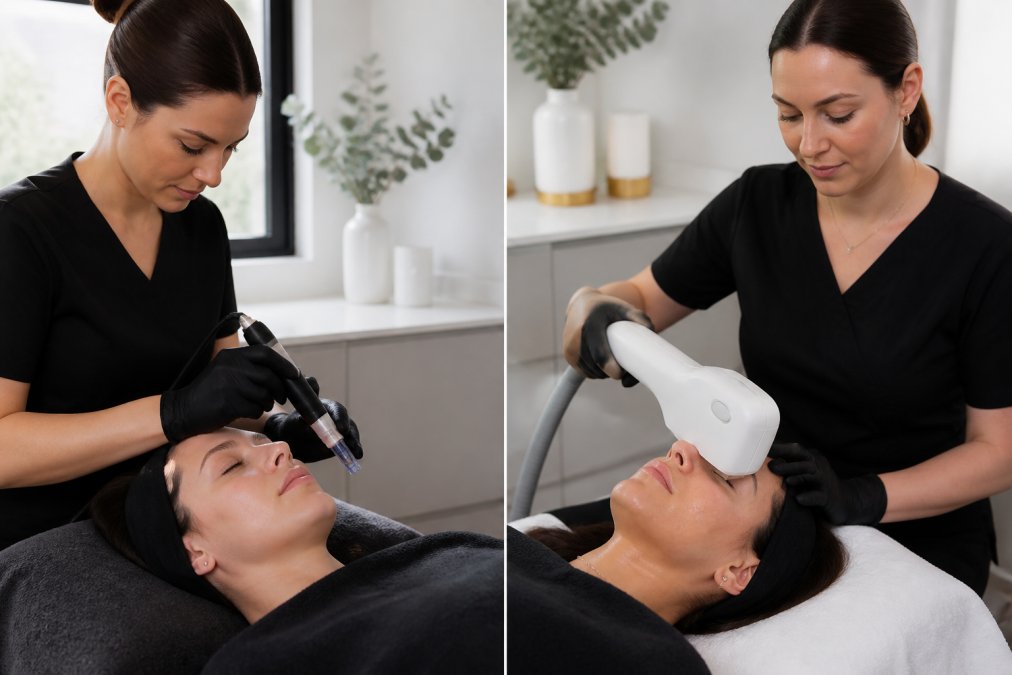
Choosing between microneedling and HIFU for skin tightening is one of the most common questions we hear at BLC Aesthetics. Both treatments aim to firm and rejuvenate skin, but they work in completely different ways. Microneedling creates controlled micro-injuries to trigger collagen production near the surface, while HIFU delivers focused ultrasound energy to deeper structural layers.
The right choice depends on what’s actually bothering you. Fine lines, texture, and scarring respond well to microneedling. Sagging along the jawline or a softening neck responds better to HIFU.
HIFU Skin Tightening Benefits and How Long HIFU Results Last
HIFU skin tightening benefits centre on lifting rather than resurfacing. The treatment bypasses the surface entirely and targets the deeper structural layers that support your face. Many patients notice a more defined jawline and firmer cheeks within weeks, with results building gradually as collagen remodels over several months.
How long do HIFU results last? Most clinics find results hold for around 12 months, though this varies with age, skin quality, and lifestyle. Maintenance sessions are usually spaced annually rather than monthly.
Microneedling Recovery Time and Is HIFU Painful?
Microneedling recovery time is typically short. Expect redness similar to mild sunburn for a day or two, with most people returning to normal activities quickly. A topical numbing cream is applied beforehand to keep discomfort manageable.
Is HIFU painful? Sensations vary. Most describe deep warmth or brief prickling as the ultrasound energy reaches deeper layers. Discomfort is generally tolerable without anaesthesia, though some areas feel more sensitive than others.
Frequently Asked Questions
What is the primary difference between microneedling and HIFU?
Microneedling creates controlled micro-injuries in the upper dermis to trigger collagen induction therapy, improving skin texture, fine lines and acne scarring. HIFU delivers focused ultrasound energy to deeper layers, including the superficial muscular aponeurotic system, to lift and tighten lax skin. One refines surface quality, the other targets structural sagging, so the right choice depends on whether your main concern is texture or laxity.
Which treatment is better suited for fine lines versus skin laxity?
For fine lines and surface-level concerns, microneedling is typically the better fit because it stimulates collagen synthesis in the upper dermis and improves skin texture. For skin laxity along the jawline or neck, HIFU is usually more appropriate since it reaches deeper tissue layers to create a lifting effect. A consultation can confirm which approach matches your specific concerns and skin condition.
Are these skin tightening treatments suitable for all skin types?
Microneedling and HIFU are generally suitable for a range of skin tones, though suitability depends on individual factors including skin condition, medical history and current medications. A thorough consultation with a qualified clinician is essential to assess candidacy, discuss realistic outcomes and rule out any contraindications before treatment begins.
Deciding between these treatments is easier with a proper assessment. At BLC Aesthetics, our Registered Nurse-led team builds personalised treatment plans around your skin, not a one-size-fits-all protocol. Book a consultation to find out which approach suits your goals.