
Table of Contents
- Why Your Skin Looks Dull (And How to Fix It)
- Clinical Skin Brightening Treatments: The Professional Standard
- 1. DiamondGlow: Instant Radiance Through Resurfacing
- 2. VI Peel: Chemical Exfoliation for Pigmentation
- 3. Halo Laser: Fractional Resurfacing for Deep Texture Repair
- 4. Forever Young BBL: Light Therapy for Tone and Collagen
- 5. Microneedling: Collagen Induction for Long-Term Health
- Understanding Recovery Time for Skin Resurfacing
- Frequently Asked Questions
Last Updated: September 6, 2026
Dull, tired-looking skin is one of the most common concerns we hear about, yet it is also one of the most treatable. A dull complexion is usually the result of a buildup of dead skin cells, reduced cell turnover, and environmental damage. The most effective approach combines clinical treatments that resurface the skin with a daily routine that protects the moisture barrier. At BLC Aesthetics, our Registered Nurse-led team recommends a layered strategy, and below we outline some of the best skin treatments for a dull complexion.
Most people assume that achieving radiance requires aggressive exfoliation, but the opposite is often true. Harsh scrubs can damage the skin barrier, leading to inflammation that actually makes dullness worse. Professional standards often involve medical-grade resurfacing that removes damaged epidermal layers while stimulating the dermal layers beneath.
Why Your Skin Looks Dull (And How to Fix It)
A dull complexion develops when dead skin cells accumulate on the surface faster than they are shed, a process that naturally slows with age. This buildup scatters light unevenly, so the skin reflects less light and appears grey or flat rather than glowing. Dehydration, sun exposure, and a weakened moisture barrier all accelerate this process, as does a slowdown in collagen production.
The fix requires two parallel tracks: removing the buildup through controlled exfoliation, which chemical peels and laser rejuvenation achieve, and stimulating fresh cell turnover and collagen so the skin renews itself properly. Internal factors, including hydration and diet, also influence regeneration, which is why a holistic approach tends to outperform any single treatment.
A dull complexion is a surface symptom of slower cell turnover and barrier damage. The most effective treatments work on both the epidermal surface and the dermal layers beneath to restore radiance from the inside out.
Clinical Skin Brightening Treatments: The Professional Standard
Clinical skin brightening treatments differ from home care in one fundamental way: they penetrate deeper and trigger a controlled healing response. Professional procedures such as chemical peels, fractional laser resurfacing, and light therapy target specific layers of the skin to correct hyperpigmentation, uneven texture, and dullness at the source.
These treatments are typically performed by dermatologists or trained clinicians and are classified as non-surgical procedures. The most effective protocols combine multiple modalities, for example pairing a resurfacing laser with a chemical peel. Recovery time varies significantly between treatments, from zero downtime with light therapy to several days of peeling after a deeper chemical peel.
Ingredient Safety: What Not to Mix with Clinical Treatments
One of the most overlooked aspects of clinical skin brightening is how your home care routine interacts with professional treatments. Many brightening ingredients are potent on their own, but combining them incorrectly, or using them too close to a procedure, can compromise results and cause significant irritation.
Vitamin C and Retinoids: A Timing Issue
Vitamin C (L-ascorbic acid) and retinoids (such as tretinoin or adapalene) are both powerful brightening agents, but they should not be applied at the same time of day. Vitamin C works best in an acidic environment, while retinoids require a different pH to function optimally. Applying them together can neutralise both ingredients and increase the risk of irritation. The standard protocol is to use vitamin C in the morning under sunscreen and reserve retinoids for the evening. In the week leading up to a chemical peel or laser treatment, most practitioners recommend pausing retinoids entirely to reduce skin sensitivity and prevent excessive peeling.
AHAs and BHAs: The Over-Exfoliation Risk
Alpha-hydroxy acids (glycolic, lactic, mandelic) and beta-hydroxy acids (salicylic) are common in at-home brightening serums. Using them daily while also undergoing professional peels or laser resurfacing can strip the skin barrier and trigger inflammation, the very condition that worsens dullness. A common pattern is for patients to continue their usual exfoliating acids after a VI Peel or Halo session, only to experience prolonged redness and flaking. The rule of thumb is to discontinue all exfoliating acids at least five to seven days before any clinical resurfacing and to reintroduce them gradually only after the skin has fully healed, typically after one to two weeks.
Niacinamide and Vitamin C: A Compatibility Question
There is ongoing debate about whether niacinamide and vitamin C should be used together. Some research suggests that at high concentrations, niacinamide can oxidise L-ascorbic acid, reducing its efficacy. However, most modern formulations are buffered to prevent this interaction. The practical guidance from dermatologists is that if you are using a high-strength vitamin C serum (15% or above), it is safer to apply niacinamide at a different time of day, or to choose products specifically formulated to be compatible.
Hydroquinone: The Cautionary Note
Hydroquinone is a prescription-strength depigmenting agent used for stubborn hyperpigmentation. While effective, it should only be used under professional supervision and for limited durations, typically three to four months followed by a break. Prolonged or unsupervised use can lead to ochronosis, a condition where the skin darkens permanently (PubMed). Hydroquinone is available only by prescription, and your clinician will advise on the appropriate protocol if it is indicated for your skin.
Before any clinical brightening treatment, disclose your full home care routine to your clinician, including vitamin C, retinoids, acids, and any prescription products. The single most common cause of poor outcomes and prolonged downtime is the failure to pause certain active ingredients before a procedure.
Skin Type Considerations for Clinical Treatments
Dullness manifests differently depending on your skin type, and this should influence both the treatment you choose and how you prepare for it.
Oily and Combination Skin
Oily skin types often experience dullness from a buildup of sebum and dead cells within the pores. Chemical peels containing salicylic acid are particularly effective here, as the lipophilic nature of salicylic acid allows it to penetrate oil-rich follicles. DiamondGlow with its extraction phase is also well-suited to congested skin. Post-treatment, oil production may normalise as the barrier improves, but you may need to adjust your moisturiser to a lighter gel formulation during the healing phase.
Dry and Dehydrated Skin
Dry skin types tend to have a compromised moisture barrier, making them more prone to irritation from aggressive resurfacing. For these patients, microneedling combined with hyaluronic acid infusion can be preferable to deeper chemical peels, as it builds barrier function while stimulating collagen. If a chemical peel is chosen, a lighter formulation such as mandelic acid, which has a larger molecular size and penetrates more slowly, is gentler on dry skin. Hydration-focused aftercare is critical, and you should expect to increase your moisturiser application frequency during recovery.
Sensitive and Reactive Skin
Sensitive skin requires the most cautious approach. Forever Young BBL can be a safe starting point, as it does not disrupt the epidermal barrier. For those considering microneedling, a shorter needle depth (0.5 mm rather than 1.0 mm or deeper) reduces the risk of prolonged redness. Patch testing is advisable before any chemical peel, and your clinician may recommend a barrier-repair preparation phase using ceramide-based products for two to four weeks before the procedure.
Deeper Skin Tones (Fitzpatrick Types IV-VI)
Darker skin tones carry a higher risk of post-inflammatory hyperpigmentation after resurfacing (peer-reviewed research). VI Peel is formulated to be safe across all skin types, but Halo Laser requires careful parameter adjustment to minimise thermal damage. Pre-treatment with a tyrosinase inhibitor such as kojic acid or azelaic acid for two weeks can reduce the risk of rebound pigmentation. Always choose a clinician with experience treating your skin type.
A dull complexion is rarely solved by a single product or one-off treatment. A reliable path to lasting radiance often combines clinical resurfacing with collagen-stimulating treatments, supported by a daily routine of antioxidants and sunscreen. Choosing the right treatment depends on your skin type, your tolerance for downtime, and your primary concern.
1. DiamondGlow: Instant Radiance Through Resurfacing
DiamondGlow is a medical-grade resurfacing treatment that exfoliates, extracts, and infuses the skin with professional-grade serums in a single session. It uses a diamond-tip wand for precise physical exfoliation, high-power suction to clear congestion from the pores, and then delivers SkinMedica Pro-Infusion Serums tailored to your specific skin needs.
The standout benefit is immediacy. DiamondGlow can provide instant radiance and visibly improved skin texture with no downtime, making it ideal if you have an event approaching or want a quick complexion boost. The main limitation is that it requires professional administration in a clinical setting.
2. VI Peel: Chemical Exfoliation for Pigmentation
VI Peel is a medium-depth chemical peel that uses a synergistic blend of TCA, Retin-A, salicylic acid, and vitamin C to target pigmentation, texture, and dullness. It is suitable for all skin types and tones, which is a significant advantage over deeper peels that carry more risk for darker skin.
This peel can be effective for stubborn hyperpigmentation and may provide visible results after a single treatment. The trade-off is a peeling phase that requires several days of downtime, typically beginning around day three and lasting up to a week. For those willing to manage the recovery, the improvement in skin tone and brightness can be substantial.
3. Halo Laser: Fractional Resurfacing for Deep Texture Repair
Halo Laser is a hybrid fractional laser that combines non-ablative and ablative wavelengths to target both surface and deep skin concerns in one treatment. This dual-wavelength technology allows for customisable results, making it one of the most versatile options for addressing sun damage, fine lines, and dull texture.
What sets Halo apart is its precision. The treatment can be adjusted to control the depth of resurfacing, minimising thermal damage while still delivering significant improvement. Results can be long-lasting, but the procedure requires recovery time and carries a higher cost than lighter treatments.
4. Forever Young BBL: Light Therapy for Tone and Collagen
Forever Young BBL uses BroadBand Light therapy to target melanin and haemoglobin in the skin, effectively treating the pigment and redness that contribute to a dull appearance. The light energy also stimulates collagen production, which improves skin clarity and brightness over time.
The main advantage of BBL is that it is non-invasive with zero downtime, and sessions are relatively quick. The catch is that optimal results typically require a series of sessions rather than a single treatment. For those dealing with redness and pigmentation, BBL is often the first-line recommendation because it addresses both concerns simultaneously.
5. Microneedling: Collagen Induction for Long-Term Health
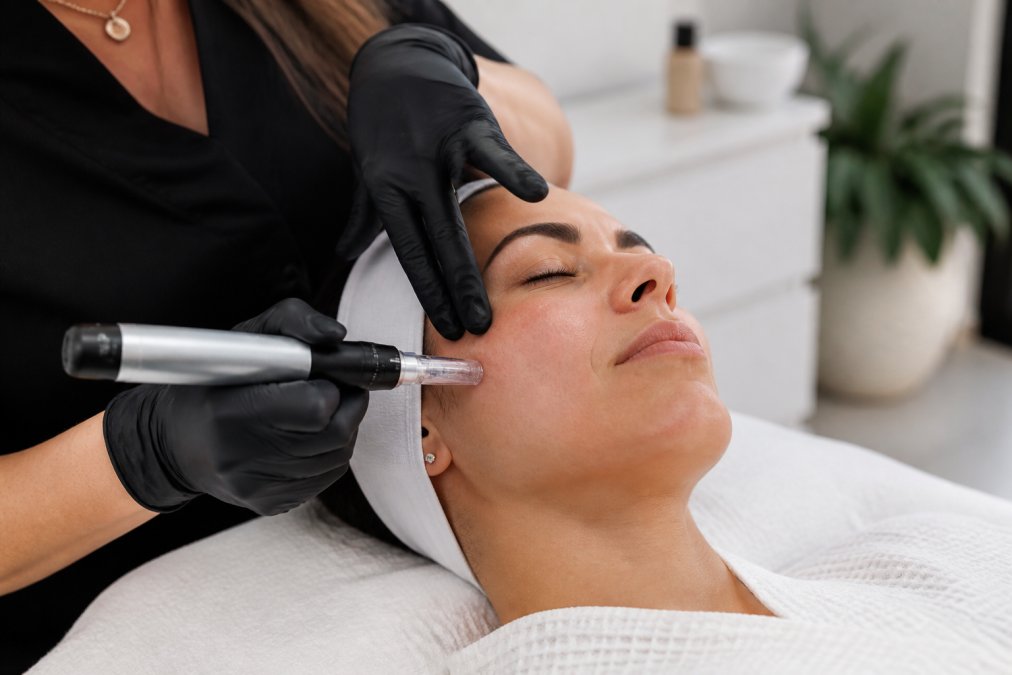
Microneedling is a clinical procedure that uses fine needles to create controlled micro-injuries in the skin, triggering the body’s natural healing response and stimulating collagen and elastin synthesis. It is an effective treatment for improving overall skin texture and radiance through regenerative therapy.
Unlike treatments that simply remove the top layer of skin, microneedling works by building new tissue from within. This can make it effective for long-term skin health, reducing the appearance of pores and fine lines while improving the absorption of topical products. The downtime is minimal compared to laser resurfacing, though most people require a course of sessions to achieve their desired results.
For best results, combining microneedling with a vitamin C serum in the weeks following treatment can be beneficial. The micro-channels created during the procedure may allow the active ingredients to penetrate deeper, potentially maximising the brightening effect of both treatments.
Understanding Recovery Time for Skin Resurfacing
Recovery time for skin resurfacing depends entirely on the depth of the treatment, and this is often the deciding factor for patients choosing between options. Light treatments such as Forever Young BBL and DiamondGlow require no downtime, while medium-depth chemical peels like VI Peel involve several days of visible peeling.
| Treatment | Downtime | Typical Course | Primary Benefit |
|---|---|---|---|
| DiamondGlow | None | Single session | Instant radiance and hydration |
| VI Peel | 3-7 days peeling | 1-3 sessions | Pigmentation and tone correction |
| Halo Laser | 3-5 days redness | 1-2 sessions | Deep texture and sun damage repair |
| Forever Young BBL | None | 3+ sessions | Redness, pigmentation, collagen |
| Microneedling | 1-2 days redness | 3+ sessions | Long-term collagen and texture |
What to Expect Day by Day
The recovery experience differs significantly between treatment types, and knowing what to expect at each stage helps you plan your schedule properly.
Days 0-2: The Immediate Aftermath
Immediately after any resurfacing treatment, your skin will feel warm, tight, and may appear red or flushed. For Halo Laser and microneedling, this redness is typically most pronounced in the first 24 hours and gradually subsides over the following two to three days. Your clinician will apply a soothing balm or cooling mask, and you should continue applying a gentle, fragrance-free moisturiser several times daily. Avoid active ingredients, including vitamin C, retinoids, and alpha-hydroxy acids, during this window, as the skin barrier is compromised.
Days 3-5: The Peeling Phase (Chemical Peels)
For VI Peel specifically, the peeling phase typically begins around day three. The skin will feel tight and may look bronzed before the superficial layers flake off; this is the exfoliating action working as intended. It is crucial not to pick or pull at the peeling skin, as this can lead to scarring or patchy pigmentation. By day five to seven, the majority of peeling is complete, revealing fresher, brighter skin underneath.
Days 5-10: Pinkness and Sensitivity (Halo Laser)
With Halo Laser, the initial redness fades by day three to four, but a subtle pinkness, often described as a ‘sunburn-like’ appearance, can persist for up to ten days. The skin may also feel rough or sandpapery as the micro-injuries heal. During this phase, strict sun protection is non-negotiable, broad-spectrum SPF 50+ applied every two hours if you are outdoors.
Managing Side Effects and Complications
While downtime is generally well-tolerated, certain side effects warrant attention. Prolonged redness lasting beyond two weeks, blistering, or signs of infection such as increased pain, swelling, or discharge should prompt an immediate call to your treating clinician. Most clinics offer a follow-up review at the two-week mark to assess healing and adjust your home care routine accordingly.
Patients often underestimate how dry their skin will feel during the first week. The barrier is temporarily compromised, and transepidermal water loss increases significantly. Using a ceramide-rich moisturiser and a hydrating serum containing hyaluronic acid helps restore barrier function and speeds up visible recovery.
When Will You See Results?
The timeline for visible results varies by treatment. DiamondGlow can offer immediate radiance that peaks at around 24 to 48 hours. VI Peel results may become apparent once peeling completes, typically by day seven, with continued improvement over the following four to six weeks. Halo Laser results develop progressively; patients may notice texture improvement by week two, with optimal results visible at the three-month mark. Microneedling and BBL require multiple sessions, with cumulative improvement after each treatment.
Never schedule a resurfacing treatment within two weeks of a major event or holiday. While most visible peeling resolves within a week, residual pinkness and sensitivity can persist longer, and sun exposure during the healing phase increases the risk of post-inflammatory hyperpigmentation.
The key to managing recovery is planning. If you have a major event or holiday coming up, schedule your treatment at least two weeks in advance. Your clinician should provide a clear aftercare protocol, including sun protection and moisturising. Many people find that the visible improvement justifies the recovery period, but understanding the timeline helps set realistic expectations.
Frequently Asked Questions
What clinical treatment is best for brightening a dull complexion?
The best clinical treatment depends on your skin’s specific needs. For immediate radiance and deep pore cleansing, DiamondGlow is effective with no downtime. For stubborn pigmentation, a VI Peel or Forever Young BBL targets discolouration. If texture and collagen loss are the primary issues, Halo Laser or microneedling offer longer-term results. A consultation with a Registered Nurse-led clinic like BLC Aesthetics can determine which approach, or combination, will address your dull complexion most effectively.
How long is the recovery time for skin resurfacing treatments?
Recovery time for skin resurfacing varies by treatment depth. DiamondGlow is non-invasive with minimal to no downtime. A VI Peel involves a visible peeling phase lasting a few days. Halo Laser, being a fractional treatment, typically requires 3-5 days of social downtime as the skin heals and flakes. Your clinician will provide specific aftercare instructions to support your skin through the recovery process and optimise your results.
What are the benefits of PRF over PRP for skin rejuvenation?
While both use your blood’s growth factors, PRF (Platelet-Rich Fibrin) is processed without additives and at a lower speed, preserving a higher concentration of stem cells and white blood cells. This creates a stronger, slower-releasing scaffold that stimulates collagen production over a longer period. PRF can be beneficial for skin quality and texture improvement, and may offer sustained results for a dull complexion compared to traditional PRP.
How often should I get professional treatments to maintain brightness?
The frequency depends on the treatment. For maintenance, a DiamondGlow session every 4-6 weeks can sustain radiance. A series of chemical peels or BBL sessions, often spaced a month apart, builds cumulative results before moving to a maintenance schedule of twice a year. Your clinician will tailor a plan based on your skin’s response and your long-term goals for skin health and glow.