
Table of Contents
- PRP and PRF: What Each Treatment Actually Is
- Key Benefits of PRF Over PRP: A Side-by-Side Comparison
- PRF vs PRP for Under Eye Treatment
- Hair Loss, Skin Rejuvenation, and the Benefits of PRF Over PRP
- How Long Does PRF Last Compared to PRP?
- Is PRF Worth the Cost? Candidacy and Value
- Frequently Asked Questions
Last Updated: August 27, 2026
PRP and PRF: What Each Treatment Actually Is
Regenerative aesthetics has shifted considerably over the past decade, with platelet-rich plasma (PRP) and platelet-rich fibrin (PRF) at the centre of that conversation. The question we hear most often is: what separates them, and does the difference matter for your results? The answer is yes, and the distinction goes deeper than most clinic websites suggest.
Platelet-rich plasma (PRP) is an autologous concentrate derived from a patient’s own blood, processed to isolate platelets and growth factors. The result is a liquid injectable that delivers concentrated cellular signalling proteins directly to target tissue.
Platelet-rich fibrin (PRF) is the next generation of that concept. It retains platelets, growth factors, and a three-dimensional fibrin matrix, along with white blood cells and stem cells. Unlike PRP, PRF is prepared without anticoagulants, which fundamentally changes how growth factors are released and how tissue responds.
How PRP Is Prepared and What It Contains
PRP preparation begins with a blood draw, typically 10-60 mL depending on the treatment area. The sample is placed into tubes containing an anticoagulant, then spun in a centrifuge at high speeds. This separates the blood into three layers: red blood cells at the bottom, a buffy coat in the middle containing platelets and white blood cells, and platelet-poor plasma at the top.
The middle and upper layers are extracted and re-injected or applied topically. The anticoagulant keeps the sample liquid throughout processing, which is useful for injection but means platelets activate immediately on contact with tissue. This rapid activation produces a quick but relatively short-lived release of growth factors including PDGF, VEGF, and TGF-β.
According to the Therapeutic Goods Administration’s medical devices guidance, devices used in PRP preparation in Australia must meet ARTG listing requirements as Class IIa medical devices.
How PRF Differs in Preparation and Composition
PRF preparation uses lower centrifugation speed and, critically, no anticoagulants. The absence of anticoagulants allows the blood to clot naturally during the spin, forming a fibrin matrix that traps platelets, leukocytes, and cytokines within a gel-like scaffold.
The T-Lab PRF System, ARTG-listed as a Class IIa medical device in Australia, uses micro-polishing technology on the inner tube surface to prevent premature platelet aggregation during processing. This allows practitioners to produce injectable PRF (I-PRF) as well as solid A-PRF gel, depending on the treatment indication.
The result is fundamentally different in structure. Where PRP is a liquid concentrate, PRF is a biologically active scaffold. That structural difference drives most of the clinical advantages discussed below.
Key Benefits of PRF Over PRP: A Side-by-Side Comparison
PRF outperforms PRP in several measurable ways, though PRP remains a strong option for specific indications.
| Feature | PRP | PRF | Advantage |
|---|---|---|---|
| Anticoagulants used | Yes | No | PRF |
| Fibrin matrix present | No | Yes | PRF |
| Growth factor release | Rapid, short burst | Slow, sustained | PRF |
| Platelet concentration | Moderate to high | High | PRF |
| Leukocyte content | Variable | Retained naturally | PRF |
| Texture | Liquid | Gel to liquid | PRF (area-dependent) |
| Preparation complexity | Lower | Moderate | PRP |
| Best for acute treatment | Yes | Less so | PRP |
| Best for collagen stimulation | Moderate | Strong | PRF |
Platelet Concentration and Growth Factor Release
PRF typically achieves higher platelet concentration than standard PRP preparations. PRP activates rapidly on injection, releasing most growth factors within the first few hours. PRF releases growth factors gradually over seven to fourteen days, mirroring the body’s natural wound healing cascade.
This slow-release mechanism matters because collagen production and tissue repair require sustained growth factor presence. Fibroblast activation, angiogenesis, and cellular signalling all depend on prolonged growth factor availability. A single burst delivery stimulates an initial response; sustained delivery supports a longer regenerative cycle.
When evaluating a clinic’s PRF offering, ask specifically whether their centrifuge and tubes are ARTG-listed. The T-Lab PRF System is currently the only ARTG-listed PRF tube in Australia; that regulatory status is worth confirming before treatment.
The Fibrin Matrix: Why It Changes Everything
The fibrin matrix is the structural element that separates PRF from PRP. Think of it as a bio-scaffold: a three-dimensional network that physically holds growth factors, platelets, and leukocytes in place at the treatment site.
In PRP, growth factors disperse relatively quickly. In PRF, the fibrin matrix acts as a slow-release depot, anchoring bioactive molecules at the target site and releasing them as the scaffold gradually degrades over one to two weeks. This supports adipose tissue integration, promotes angiogenesis, and provides a structural framework for collagen formation. It also reduces inflammatory response compared to PRP because leukocyte-rich preparations within a fibrin scaffold modulate rather than amplify inflammation.
The clinical implication: PRF produces more gradual, more natural-looking results with less post-treatment swelling.
PRF vs PRP for Under Eye Treatment
For under-eye treatment, PRF is widely regarded as the superior choice. The periorbital area presents specific challenges: the skin is exceptionally thin, tissue is delicate, and the margin for error with inflammatory responses is narrow.
PRP’s rapid growth factor release can trigger localised swelling in this region, which is counterproductive when reducing periorbital texture and hollowing. PRF’s gel-like consistency allows it to function as a bio-filler, adding subtle volume while simultaneously stimulating collagen production. This dual action is something PRP cannot replicate.
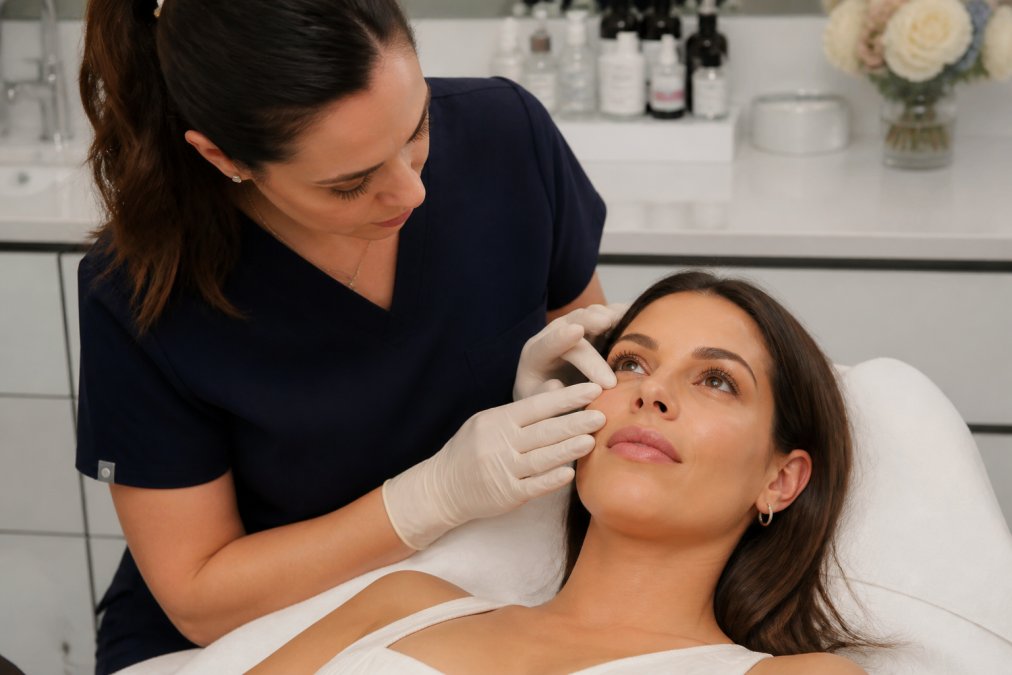
The T-Lab PRF System identifies under-eye and nasolabial fold treatment as key applications. The injectable PRF produced is anticoagulant-free, reducing the risk of bruising and post-treatment discolouration in the delicate periorbital zone.
For patients whose primary concern is skin laxity, hollowing, or fine lines beneath the eyes, PRF is the more targeted and clinically appropriate option.
Not every clinic offering PRF for under-eye treatment uses ARTG-listed equipment. The quality of PRF produced is directly tied to centrifuge protocol and tube specification. Always confirm the system your practitioner uses before proceeding.
Hair Loss, Skin Rejuvenation, and the Benefits of PRF Over PRP
Both treatments have established roles in hair restoration and facial biostimulation, but PRF’s benefits become particularly apparent when the goal is long-term regeneration rather than short-term stimulation.
Hair Follicle Stimulation
Hair follicle stimulation requires sustained growth factor delivery to the dermal papilla, the cellular structure that governs follicle cycling. PRP delivers an initial stimulus effective for early-stage hair thinning, but results often require more frequent maintenance sessions.
PRF’s slow-release growth factor profile provides prolonged stimulation to hair follicles, supporting the anagen (growth) phase more consistently across the weeks following treatment. The fibrin matrix also promotes angiogenesis around follicles, improving the vascular supply that hair growth depends on.
As noted in Dermatology research on platelet-rich fibrin for hair loss, PRF preparations show promising outcomes for androgenetic alopecia, with researchers attributing results to sustained cytokine release and the structural support of the fibrin scaffold.
For patients with moderate hair thinning, many practitioners now prefer PRF as the primary regenerative therapy.
Facial Biostimulation and Collagen Production
Facial biostimulation with PRF works through two mechanisms that PRP cannot fully replicate. The fibrin matrix acts as a temporary bio-scaffold that physically supports tissue while stimulating fibroblasts to produce new collagen. Simultaneously, sustained cytokine release drives ongoing cellular signalling for collagen synthesis over the two weeks following treatment.
PRP delivers a strong initial biostimulation signal, but without the structural scaffold, the collagen production response tends to be shorter-lived. For patients seeking progressive improvement in skin texture, tone, and firmness, PRF’s extended regenerative window produces more durable outcomes per treatment session.
How Long Does PRF Last Compared to PRP?
PRF results generally last longer than PRP results, though both treatments require a course of sessions for optimal outcomes. The difference comes down to the slow-release mechanism and the structural support the fibrin matrix provides during tissue remodelling.
PRP results for skin rejuvenation and hair restoration typically become visible within four to six weeks and may last three to six months before maintenance is needed.
PRF results follow a different timeline. Because growth factors are released gradually over one to two weeks, the regenerative process extends further into the post-treatment period. Many patients report continued improvement for up to three months after a single PRF session, with results persisting for six to twelve months depending on the treatment area, the patient’s biology, and the quality of the PRF preparation.
A standard course of three PRF sessions, spaced four to six weeks apart, is commonly recommended to build cumulative collagen stimulation. Maintenance sessions every six to twelve months are typical for sustaining results.
| Treatment | Onset of Results | Duration Per Session | Typical Course | Maintenance |
|---|---|---|---|---|
| PRP | 4-6 weeks | 3-6 months | 3 sessions | Every 3-6 months |
| PRF | 4-8 weeks | 6-12 months | 3 sessions | Every 6-12 months |
Is PRF Worth the Cost? Candidacy and Value
PRF treatment generally costs more than PRP, reflecting more specialised equipment, ARTG-listed consumables, and higher technical skill involved in preparation. Whether that additional cost represents value depends on what you are trying to achieve and how many sessions you would otherwise need.

For patients who would otherwise need more frequent PRP sessions to maintain results, the cost-per-outcome calculation often favours PRF. Fewer sessions over a twelve-month period, combined with more durable collagen stimulation, can make PRF the more economical choice over a full treatment cycle.
For specific pricing at BLC Aesthetics, we recommend booking a consultation directly, as treatment costs depend on the area being treated, the number of sessions in your plan, and the protocol your practitioner recommends.
Who Is a Good Candidate for PRF?
PRF is well suited to patients who meet the following criteria:
- Aged 25 and above, with early to moderate signs of skin ageing, volume loss, or hair thinning
- In good general health, without active infection, clotting disorders, or conditions that impair platelet function
- Seeking gradual, natural-looking improvement rather than immediate dramatic change
- Willing to commit to a course of treatments rather than expecting single-session results
- Not pregnant or breastfeeding
PRF may be less appropriate for patients on anticoagulant medications, those with certain autoimmune conditions, or individuals with very low platelet counts. A thorough consultation with a qualified practitioner is essential before proceeding. As outlined by Australian Health Practitioner Regulation Agency guidance on cosmetic procedures, practitioners are required to conduct appropriate pre-treatment assessments and obtain informed consent before performing any aesthetic procedure.
PRF is not simply a “better PRP.” It is a different biological product with a different mechanism. Patients who are good candidates for PRP may benefit even more from PRF, but candidacy should always be assessed individually.
Post-Treatment Maintenance and What to Expect
After PRF treatment, mild redness, swelling, and bruising at injection sites are common and typically resolve within 24 to 72 hours. Because PRF is autologous and anticoagulant-free, the inflammatory response is generally lower than with some PRP preparations, particularly in sensitive areas like the under-eye zone.
For the first 24 hours post-treatment, practitioners typically advise:
- Avoid touching or applying pressure to treated areas
- No strenuous exercise or activities that significantly raise core body temperature
- Avoid direct sun exposure and apply broad-spectrum SPF
- Skip active skincare ingredients such as retinoids and AHAs for 48 hours
- Stay well hydrated to support the body’s natural healing response
Beyond the immediate recovery period, maintenance protocol matters as much as the treatment itself. Patients who support PRF results with consistent at-home skincare, adequate sun protection, and appropriate nutrition tend to see better long-term outcomes. The BLC Aesthetics team provides personalised post-treatment guidance as part of every treatment plan.
For hair loss treatments, additional protocols such as scalp massage, low-level laser therapy, or topical minoxidil are sometimes recommended alongside PRF to maximise follicle stimulation.
Choosing between PRF and PRP depends on your goals, your biology, and the expertise of the practitioner preparing the product. The BLC Aesthetics team, led by founder and Registered Nurse Bianca Lorena, has helped more than 3,000 clients navigate exactly these decisions. With clinics in Melbourne and the Gold Coast, personalised treatment planning, and recognition as Aesthetic Clinic of the Year 2025, BLC Aesthetics brings both the clinical knowledge and the technical equipment to deliver PRF treatments that are evidence-informed and tailored to your individual goals. Book a consultation to find out which treatment is right for you.
Frequently Asked Questions
Does PRF work better than PRP for facial rejuvenation?
For most facial rejuvenation goals, PRF offers several advantages over PRP. Because PRF is prepared without anticoagulants and spun at a lower centrifugation speed, it retains a higher concentration of platelets, cytokines, and growth factors within a fibrin matrix. This bio-scaffold allows for a slower, more sustained release of regenerative signals, supporting collagen production and tissue repair over a longer period. PRP acts faster but dissipates more quickly. The better choice depends on your specific concerns and skin condition, which a qualified practitioner can assess during consultation.
How long do PRF results typically last?
PRF results generally develop gradually over four to six weeks as the fibrin matrix slowly releases growth factors and stimulates collagen production. Visible improvements in skin texture, tone, and laxity can persist for six to twelve months, though this varies by individual, treatment area, and number of sessions completed. Maintenance treatments are typically recommended every six to twelve months to sustain results. PRP results tend to appear sooner but may require more frequent top-ups. A personalised maintenance protocol from your treating practitioner will give you the most accurate timeline for your situation.
Why is PRF considered a more natural alternative to PRP?
PRF is produced from the patient’s own blood without any added anticoagulants, making it a fully autologous and additive-free concentrate. The absence of anticoagulants allows the fibrin matrix to form naturally during centrifugation, creating a bio-scaffold that closely mimics the body’s own wound-healing environment. This natural cellular signalling environment supports angiogenesis and tissue repair with minimal inflammatory response. PRP typically requires anticoagulants to remain in liquid form, which introduces a foreign substance into the preparation. For patients prioritising a natural aesthetic outcome, PRF’s additive-free profile is a meaningful distinction.
Is PRF a good option for under-eye concerns?
PRF is widely used for periorbital texture, hollowing, and fine lines because its gel-like consistency allows it to be injected as a bio-filler rather than a purely liquid treatment. The fibrin matrix provides subtle volume while simultaneously delivering growth factors that improve skin quality in the delicate under-eye area. PRP can also be used in this region, but the lack of a fibrin scaffold means it does not provide the same volumising or slow-release benefit. Results vary between individuals, and candidacy should always be assessed by a qualified practitioner before proceeding.
Is PRF worth the cost compared to PRP?
Whether PRF justifies the additional cost over PRP depends on your treatment goals and how many sessions you need. Because PRF releases growth factors more slowly and the fibrin matrix supports longer-lasting tissue repair, many patients find they require fewer maintenance sessions over time. For concerns like periorbital hollowing, skin laxity, or hair follicle stimulation where sustained biostimulation matters, the longer duration of effect can represent good value. For a precise cost-benefit assessment based on your individual needs, a consultation with a Registered Nurse practitioner is the most reliable starting point.