

Table of Contents
- Why Fillers Look Overdone (and How to Avoid It)
- How to Achieve Natural Filler Results: The Core Principles
- How to Choose a Cosmetic Injector for Subtle Enhancement
- The Importance of a Thorough Consultation
- Dermal Filler Aftercare Tips for the Best Recovery
- Dermal Filler Longevity and Maintenance: Planning Ahead
- The Safety Net: Reversibility and Hyaluronidase
- Conclusion: Start Your Journey with a Consultation
- Frequently Asked Questions
Last Updated: September 7, 2026
Why Fillers Look Overdone (and How to Avoid It)
The most common fear about dermal fillers is ending up with that unmistakable “done” look. Achieving natural filler results is not about how much product a clinician can place, but about restraint, anatomical knowledge, and a clear treatment plan. At BLC Aesthetics, our Registered Nurse-led team is dedicated to enhancing your natural beauty through precision, safety, and tailored treatment plans.
Natural filler results come down to three factors: how the injector reads your facial anatomy, how much product they use, and whether they respect the natural tissue planes. Most cases of “pillow face” are not failures of the filler itself but of clinical judgment.
Below, we break down the principles that protect you from an unnatural outcome, the questions to ask before you book, and the aftercare habits that preserve your results.
How to Achieve Natural Filler Results: The Core Principles
Natural filler results begin with a single assumption: your face has aged in a specific pattern, and the goal is restoration, not transformation. This distinction shapes every decision, from product selection to placement depth.
The ‘Less is More’ Approach
The single most reliable way to avoid an overfilled look is to use less product than you think you need. A conservative first treatment allows the clinician to see how your soft tissue responds and where adjustment is genuinely required. Gradual enhancement across two or three sessions consistently produces more natural-looking outcomes than a single high-volume appointment.
A restrained first treatment is not a compromise. It is the foundation of subtle enhancement, allowing for adjustments that a large initial dose makes impossible.
Anatomical Aging vs. Volume Loss
A common misconception is that a tired or hollow appearance is purely a volume problem. In reality, facial ageing involves bone resorption, ligament laxity, and shifts in soft tissue. A skilled injector uses filler to restore support in specific anatomical zones, such as the midface or temple, rather than simply filling lines.
How to Choose a Cosmetic Injector for Subtle Enhancement
How to choose a cosmetic injector is the most important decision in your treatment journey, and it matters far more than the brand of filler used. Look for a clinician who can articulate a treatment plan in anatomical terms, not just marketing language, and who demonstrates a portfolio of subtle, natural-looking results.
In Australia, cosmetic injecting is performed by a range of practitioners, so confirming that your clinician is a Registered Nurse or medical professional with specific training in aesthetic treatments is a reasonable baseline. Ask how many treatments they perform weekly, how they handle complications, and whether they will refuse a treatment they consider unnecessary.
Choosing an injector purely on price or proximity is the most common path to an unnatural result. Reversing an overfilled look is far more difficult and costly than choosing a conservative, experienced clinician from the start.
The Importance of a Thorough Consultation
A thorough consultation is the single most reliable predictor of whether your results will look natural. The clinician should assess your facial symmetry, skin quality, and patterns of movement, then discuss what filler can and cannot achieve for you.
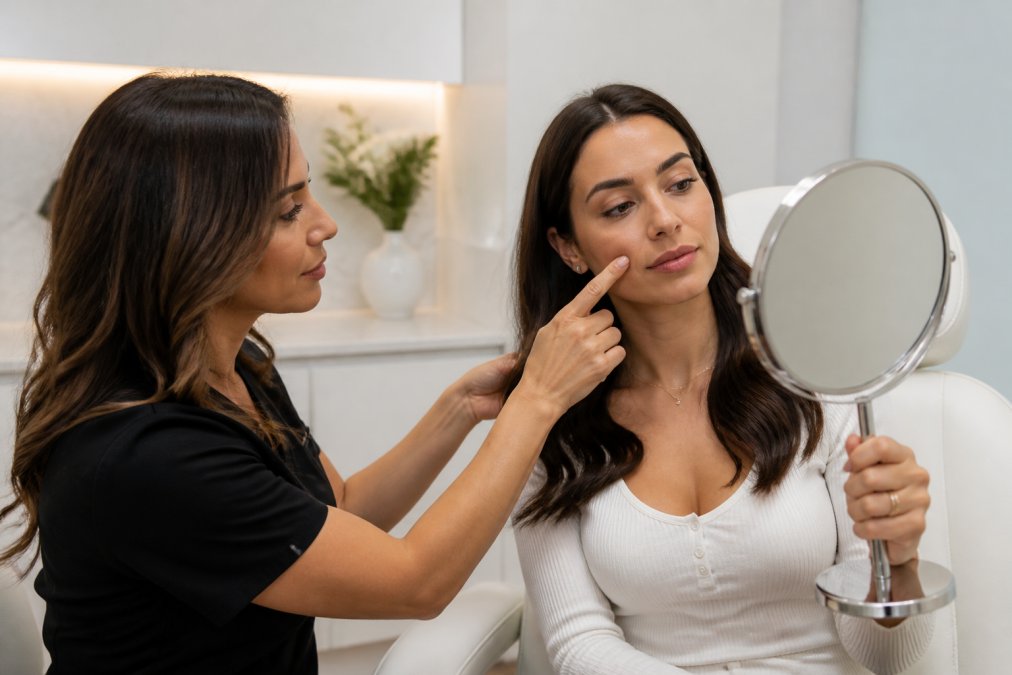
Your consultation is also the time to discuss your medical history, any previous aesthetic treatments, and your comfort with the recovery process. Be candid about your concerns, including any fear of looking “done.” During your consultation at BLC Aesthetics, our team provides a supportive and thorough consultation process designed to help you achieve your aesthetic goals.
Dermal Filler Aftercare Tips for the Best Recovery
How you care for the treatment area in the first days after your appointment directly influences both your comfort and your final result. Dermal filler aftercare tips centre on protecting the product while it settles into the tissue, a process that typically takes two to three weeks.
The First 24 to 48 Hours: What Actually Matters
The immediate post-treatment period is when the filler is most vulnerable to displacement. Hyaluronic acid fillers are hydrophilic, meaning they draw water into the treated area, which is why some swelling is expected (peer-reviewed research). For the first 24 to 48 hours, avoid:
- Touching or massaging the injection site unless your clinician instructs otherwise. Pressing or rubbing can shift the product before it settles into the intended tissue plane.
- Strenuous exercise that raises your heart rate and blood pressure, which can increase swelling and bruising. Light walking is fine, but skip high-intensity workouts for at least 48 hours.
- Alcohol, as it thins the blood and can prolong bruising. Waiting 48 hours is a reasonable minimum.
- Excessive heat, including saunas, steam rooms, and hot showers, which can increase swelling by dilating blood vessels.
Applying a cold compress for 10 to 15 minutes at a time can ease swelling, but never press firmly on the treated area. Sleeping with your head slightly elevated on an extra pillow for the first few nights also helps reduce fluid accumulation.
The First Week: What to Expect and When to Call
Most swelling and bruising resolve within five to seven days, though individual responses vary. Some patients experience small lumps or asymmetry during the first week as the product settles; this is often temporary. However, contact your clinician promptly if you experience:
- Severe or worsening pain
- Skin blanching (white patches) or mottling
- Fever or unusual redness spreading beyond the injection site
These can be signs of vascular compromise or infection, which require immediate attention. Your injector should provide a 24-hour contact number for emergencies.
Longer-Term Aftercare: Protecting Your Investment
After the first week, avoid facial treatments such as chemical peels, laser therapy, or microdermabrasion for at least two weeks, as these can accelerate filler breakdown or cause inflammation. Similarly, postpone dental work or any procedure that involves significant manipulation of the face for at least two weeks.
Arnica tablets or bromelain supplements, taken before and after treatment, can help reduce bruising. Always check with your clinician first, as these can interact with other medications.
Ultraviolet exposure breaks down hyaluronic acid over time, so daily SPF50+ on the treated areas helps your results last closer to the upper end of their expected range. Most hyaluronic acid fillers last between six and eighteen months depending on the product, the area treated, and your metabolism, but good aftercare habits can extend that window (PubMed).
The Adjustment Period: Patience Is Part of the Process
It is normal to feel some uncertainty in the first two weeks. Most practitioners recommend waiting a full three to four weeks before judging the final result, as this is when the filler has fully settled. If you are considering a top-up, schedule it after this point rather than immediately.
Dermal Filler Longevity and Maintenance: Planning Ahead
Dermal filler longevity and maintenance are rarely discussed before treatment, yet they determine whether your results stay natural over time. The real question is not just how long a single treatment lasts, it is how you maintain a natural, consistent appearance over two to five years without falling into the trap of over-treatment.
Understanding the Product Lifecycle
Different fillers have different lifespans, and your clinician should explain which product they are using and why. A softer, more fluid filler used for lip enhancement may last six to nine months, while a firmer, more cohesive product placed deep along the cheekbone can last twelve to eighteen months.
The Maintenance Schedule That Keeps Results Natural
A common pattern among patients who achieve natural, long-lasting results is a “top-up before empty” approach. Rather than waiting until a treatment has fully dissolved, many patients prefer smaller maintenance appointments every nine to twelve months. This keeps the face looking consistently refreshed without the dramatic swings that come from letting filler completely metabolise and then starting over.
A realistic long-term roadmap looks something like this:
- Year 1: Initial treatment, followed by a review at three to four weeks to assess the result and decide if a small top-up is needed. A second review at six months helps track how quickly you metabolise the product.
- Year 2: Based on your metabolism, schedule a maintenance appointment before the filler fully dissolves. For most patients, this falls between months nine and twelve.
- Years 3 to 5: Continue with annual or near-annual reviews. Some patients find they need less product over time as collagen stimulation from earlier treatments provides a baseline of support.
The goal of a maintenance schedule is not to keep you in the clinic frequently. It is to ensure that any changes to your face are gradual and subtle, so that neither you nor anyone else notices a sudden shift.
Budgeting for the Long Term
Planning ahead also means being realistic about cost. Maintenance is ongoing, not a one-time expense. A clinician who maps out a realistic long-term schedule is helping you avoid the trap of over-treatment. Some clinics offer loyalty programs or reduced rates for existing patients, so it is worth asking about these options during your consultation.
The Psychological Side of Maintenance
There is also a psychological dimension to maintenance. After your first treatment, you may become more attuned to small asymmetries or signs of ageing that you previously did not notice. A good clinician will help you distinguish between genuine volume loss that warrants a top-up and normal facial variation that does not require intervention.
If you find yourself scheduling appointments more frequently than every six months, or feeling anxious when filler begins to fade, it is worth discussing this with your injector. Natural results are as much about knowing when to stop as they are about knowing what to add.
Collagen stimulation and tissue integration continue after the visible swelling subsides, so patience between sessions is part of the process. A well-planned maintenance schedule protects both your appearance and your peace of mind over the long term.
The Safety Net: Reversibility and Hyaluronidase
One of the most reassuring developments in aesthetic medicine is that hyaluronic acid fillers are reversible. If a result is uneven, overfilled, or simply not what you wanted, an enzyme called hyaluronidase can dissolve the product.
Always confirm that your chosen injector uses hyaluronic acid fillers and has hyaluronidase available on site. Knowing that an unwanted outcome can be reversed provides genuine peace of mind before treatment begins.
The existence of a reversal agent does not, however, make poor injection technique harmless. Dissolving filler requires skill, and repeated use of hyaluronidase should be approached cautiously. This is why the focus must remain on prevention: a careful consultation, a conservative treatment plan, and an injector who understands facial anatomy. As the field of aesthetic treatments continues to evolve, the emphasis on safety and reversibility is reflected in guidance from professional bodies, including the Australian Society of Plastic Surgeons’ resources on injectable safety.
Conclusion: Start Your Journey with a Consultation
Achieving natural filler results is less about finding a miracle product and more about finding a clinician who treats your face with precision and restraint. The principles are simple: start slowly, respect your anatomy, prioritise a thorough consultation, and plan for maintenance.
If you are considering dermal fillers and want guidance you can trust, the team at BLC Aesthetics offers personalised treatment planning led by Registered Nurses, with clinics in Melbourne and the Gold Coast. Our consultation process is designed to help you understand your options, set realistic expectations, and feel confident in your decisions. Book your consultation today and take the first step toward a natural, refreshed version of yourself.
Frequently Asked Questions
How do I avoid the ‘overfilled’ look with cosmetic injectables?
To avoid an overfilled appearance, prioritise a conservative treatment plan that uses smaller amounts of hyaluronic acid filler over multiple sessions. Seek a clinician with deep knowledge of facial anatomy who focuses on restoring volume to specific areas for subtle enhancement, rather than adding volume everywhere. A gradual approach allows you to assess how your face integrates the filler and adjust the plan as needed.
What should I look for in a practitioner to ensure natural results?
When choosing a cosmetic injector, look for a qualified medical professional, such as a Registered Nurse or doctor, with specific training in aesthetic injectables. Review their portfolio of work to see if their past patients’ results appear natural-looking and subtle. During the consultation, they should discuss your facial symmetry, your treatment plan, and the product selection, demonstrating a thorough understanding of facial anatomy and patient expectations.
How long do dermal fillers typically last?
Dermal filler longevity varies depending on the product type, the area treated, and your individual metabolism. Generally, hyaluronic acid fillers can last anywhere from 12 to 18 months or more. A maintenance schedule with your practitioner is key to preserving your results and managing the long-term outcome.
Can dermal fillers be reversed if I don’t like the results?
Yes, hyaluronic acid-based dermal fillers can be dissolved using an enzyme called hyaluronidase. This provides a safe and effective safety net if you are unhappy with the outcome or if a complication arises. Knowing that your treatment is reversible can help with the psychological preparation before your procedure, offering reassurance that your results are not permanent and can be adjusted by your qualified practitioner.