
Table of Contents
- What Causes a Frozen Look With Injectables
- How to Choose a Qualified Cosmetic Injector
- Anti-Wrinkle Injection Dosage and Natural Results
- Understanding Facial Anatomy and Muscle Movement
- Post-Injection Aftercare to Protect Your Results
- Correcting Over-Treatment: Your Options
- Debunking Common Myths About Frozen Faces
- Frequently Asked Questions
Last Updated: September 2, 2026
What Causes a Frozen Look With Injectables
A frozen look occurs when anti-wrinkle injectables are administered in doses that are too high or with poor injection technique, resulting in excessive muscle paralysis that restricts natural facial expression. The face loses its ability to move naturally, creating an unnatural, expressionless appearance.
This happens because anti-wrinkle injectables work by relaxing muscles responsible for dynamic wrinkles. When too much product is used or diffuses into unintended muscle groups, the result is over-treatment. The forehead becomes immobile, crow’s feet vanish but the eyes can’t crinkle naturally when smiling, and the face looks stiff.
Many people report feeling disconnected from their own face, struggling with the inability to express emotion naturally. Others notice the frozen appearance and comment on it, compounding the emotional toll.
Understanding what causes this outcome is the first step toward preventing it. Conservative dosing, proper technique, and selecting a qualified practitioner who understands facial anatomy are the three pillars of avoiding over-treatment. At BLC Aesthetics, we prioritise these fundamentals because natural-looking results depend on restraint, not maximising the dose.
A frozen look results from excessive muscle paralysis caused by too-high dosing or poor injection placement. The solution is conservative dosing, proper technique, and practitioner experience.
How to Choose a Qualified Cosmetic Injector
The single most important factor in avoiding a frozen look is selecting a practitioner with genuine clinical expertise and a philosophy of conservative treatment.
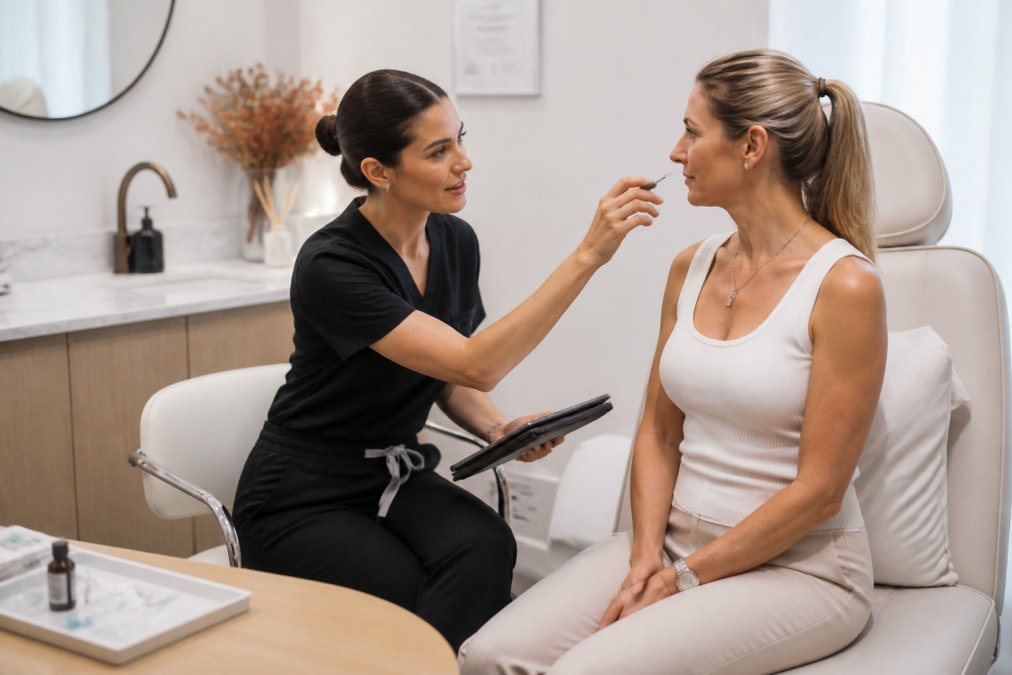
In Australia, aesthetic injectables can be administered by various practitioners, but your safety and results depend on their qualifications and experience. Look for practitioners who are Registered Nurses or doctors with specific training in aesthetic medicine. A qualified injector understands muscle anatomy in detail, which muscles move the forehead, where crow’s feet originate, how glabellar lines form, and exactly how much product is needed to soften expression without freezing it.
Ask about their training and experience directly. How many injections have they performed? What formal training have they completed? Are they part of a clinic specialising in aesthetic treatments? Red flags include vague responses about experience, reluctance to discuss qualifications, or pressure to use maximum doses.
During your consultation, a qualified injector will assess your facial anatomy and movement patterns, discuss conservative dosing as the starting point, show before-and-after photos of natural-looking results, explain exactly where product will be placed and why, and offer top-up appointments rather than loading maximum product upfront. This reveals whether the practitioner prioritises your natural appearance or simply pushes for higher doses.
At BLC Aesthetics, our Registered Nurses bring years of clinical experience and training in aesthetic medicine. We focus on understanding your facial anatomy and your specific concerns about maintaining natural expression. Our approach is conservative by design.
Avoid practitioners who cannot clearly explain their qualifications, training, or experience with anti-wrinkle injectables. Pressure to use maximum doses or vague answers about their background are warning signs.
Anti-Wrinkle Injection Dosage and Natural Results
Conservative dosing is the foundation of avoiding a frozen look. This means using the minimum effective dose to soften wrinkles while preserving your ability to move your face naturally.
Start lower and add more at a follow-up appointment if needed, rather than using the maximum dose upfront. A practitioner using this approach typically administers a modest amount of product, waits two weeks for full results, and then reassesses. This method ensures you never overshoot into frozen territory.
How much product is appropriate depends on your facial anatomy, muscle strength, and aesthetic goals. A qualified injector assesses these factors individually rather than using a one-size-fits-all approach. Anti-wrinkle injectables take 7-14 days to show full effect, with continued improvement over two weeks. A responsible practitioner schedules a two-week follow-up before considering adjustments.
Natural results are defined by what you can still do with your face. You should still be able to raise your eyebrows, frown slightly, and crinkle your eyes when you smile. The goal is softening dynamic wrinkles while keeping your face expressive. Complete absence of all expression lines often looks frozen; natural results mean lines are softer but your face still moves.
Request before-and-after photos showing natural results, not dramatic transformation. Look for images where the person’s expression is still visible and their face still moves naturally.
Understanding Facial Anatomy and Muscle Movement
A practitioner’s understanding of facial anatomy directly determines whether you’ll avoid a frozen look. The face has layers of muscles, and anti-wrinkle injectables work by relaxing specific ones.
The forehead contains several muscle groups: the frontalis muscle raises eyebrows and creates horizontal lines; the corrugator muscles between brows create glabellar lines; the orbicularis oculi muscles around eyes create crow’s feet. Each has a specific function in facial expression.
When a qualified injector treats the forehead, they understand exactly where the frontalis muscle is, how strong it is individually, and how much product will soften lines without preventing eyebrow movement. Poor technique or excessive dosing paralyses the frontalis completely, leaving the forehead immobile.
Migration is another anatomical concern. Product can diffuse beyond the injection site and affect nearby muscles. An experienced practitioner injects at precise depths and locations to minimise migration. The relationship between muscle groups also matters, over-treating the forehead can affect how eyebrows sit and how eyes look when smiling. A skilled practitioner treats conservatively to preserve facial harmony.
Post-Injection Aftercare to Protect Your Results
The first 24-48 hours after injection are critical for protecting your results and preventing complications.

Avoid touching injection sites for at least four hours. Don’t massage the area, even if tender. Avoid strenuous exercise, hot showers, saunas, and anything that increases blood flow to your face for 24 hours. Heat and increased circulation can cause product to diffuse beyond intended areas.
Sleep on your back rather than your side or stomach for the first night. This prevents pressure on injection sites and reduces product migration. Minimise sun exposure for at least two weeks and wear broad-spectrum sunscreen SPF 50+ daily. Avoid alcohol for 24 hours after treatment, as it thins blood and increases bruising and swelling.
Stick to gentle, fragrance-free skincare products for the first week. Avoid active ingredients like retinoids, vitamin C serums, or acids that might irritate treated skin. Bruising and swelling are normal and typically peak around 24-48 hours. Ice packs during the first 24 hours help minimise swelling.
If you experience severe swelling, persistent redness, or signs of infection, contact your practitioner immediately.
Correcting Over-Treatment: Your Options
If you’ve experienced a frozen look or are concerned about over-treatment, several options exist. Anti-wrinkle injectables are not permanent, and over-treatment is reversible.
Time is the simplest solution. Anti-wrinkle injectables gradually wear off over three to four months as your body metabolises the product. Your facial expression will return to normal and you’ll regain full muscle movement.
The most practical approach is waiting for the product to wear off while being very careful about your next appointment. When you return, discuss your experience with over-treatment. A good practitioner will adjust their approach, using lower doses, different placement, or different muscle groups.
Prevention is far more effective than correction. Choosing the right practitioner from the start, insisting on conservative dosing, and being clear about your concerns regarding a frozen look help you avoid the problem entirely. If you’re unhappy with current results, contact your practitioner and discuss your concerns. A responsible practitioner will listen and adjust their approach at your next appointment.
Debunking Common Myths About Frozen Faces
Myth: Any practitioner can administer injectables safely. Truth: Practitioner experience, training, and understanding of facial anatomy make an enormous difference. A Registered Nurse or doctor with specific aesthetic training has far better outcomes.
Myth: More product always means better results. Truth: Conservative dosing produces natural-looking softening. Excessive doses create the frozen look you’re trying to avoid.
Myth: You should wait until you have severe wrinkles to start injectables. Truth: Preventative treatment with conservative doses can be appropriate for younger people concerned about dynamic wrinkles.
Myth: Results are permanent. Truth: Anti-wrinkle injectables typically last three to four months. This is beneficial because if you dislike the outcome, it will naturally resolve.
Myth: A frozen look is an acceptable trade-off for wrinkle reduction. Truth: Natural-looking results are achievable with conservative dosing and proper technique. A frozen look indicates over-treatment, not successful treatment.
Myth: All practitioners use the same technique. Truth: Technique varies enormously. Injection depth, placement, dose, and approach differ between practitioners. This is why choosing carefully matters.
Avoiding a frozen look with injectables comes down to three factors: choosing a qualified practitioner with genuine clinical expertise, insisting on conservative dosing, and understanding what natural results actually look like. A frozen appearance isn’t an inevitable side effect, it’s a sign of over-treatment, and it’s entirely preventable with the right approach.
At BLC Aesthetics, our Registered Nurses prioritise your natural expression and facial harmony. We use conservative dosing, understand facial anatomy in detail, and focus on results that look like you, just fresher. Your aesthetic goals matter, but maintaining your ability to express yourself matters more. Learn more about personalised aesthetic consultation and treatment planning to see how our approach differs. Book your consultation today and discuss your concerns about natural-looking results with a practitioner who genuinely listens.
Frequently Asked Questions
How long does the frozen look last after anti-wrinkle injections?
A frozen appearance typically develops within 3-7 days as the neuromodulator takes full effect, then gradually improves as your body metabolises the product over 10-14 weeks. If over-treatment occurs, the frozen look may persist for 2-3 months. Working with an experienced practitioner who uses conservative dosing significantly reduces this risk. Results naturally soften as the product wears off, so waiting is often the safest approach if you’re unhappy with initial results.
What should I look for when choosing a qualified cosmetic injector?
Choose a medically qualified practitioner, ideally a Registered Nurse, doctor, or dentist with specialised aesthetic training. Verify their credentials, ask about their clinical experience and injection technique, and review before-and-after photos showing natural results. Request a thorough consultation where they assess your facial anatomy, discuss your goals, and explain their dosage approach. A qualified injector will prioritise subtle results and facial harmony over aggressive treatment.
Can you still have natural facial movement after anti-wrinkle treatment?
Yes. Conservative dosing and expert injection technique preserve your natural facial expressions. A skilled practitioner understands muscle anatomy and targets only the muscles that create unwanted dynamic wrinkles, leaving others untouched. You should still be able to frown, raise your eyebrows, and express emotion, just with fewer visible lines. If you cannot move your face normally, you’ve received too much product and should consult your practitioner about correction options.
How do experienced practitioners determine the correct dosage for a natural look?
Experienced practitioners assess your facial anatomy, muscle strength, and aesthetic goals during consultation. They start with conservative dosing, the minimum effective amount, and use precise injection technique to target specific muscles. This approach prevents over-treatment and allows for subtle, natural results. Top-up appointments after 2 weeks let them refine results if needed. The key is prioritising facial harmony and your individual anatomy over a one-size-fits-all approach.