

Table of Contents
- What Is a Personalised Skin Treatment Plan?
- Why a Custom Approach Works Better Than Off-the-Shelf Products
- The Cosmetic Nurse Skin Consultation Process
- Common Skin Concerns Your Plan Will Address
- Building Your Medical-Grade Skincare Routine at Home
- Combining Home Care With In-Clinic Treatments
- The Benefits of PRF Over PRP for Regenerative Skin Therapy
- How to Choose the Right Skin Program for Your Goals
- Frequently Asked Questions
Last Updated: September 1, 2026
What Is a Personalised Skin Treatment Plan?
A personalised skin treatment plan is a custom clinical approach designed specifically for your skin’s unique needs, concerns, and goals. Rather than applying a one-size-fits-all regimen, it combines professional assessment, targeted medical-grade formulas, and tailored in-clinic treatments. At BLC Aesthetics, our Registered Nurses develop these plans after thorough consultation, examining your skin type, sensitivity, environmental factors, and aesthetic objectives to create a roadmap that works for you.
The foundation begins with understanding what your skin truly needs: clinical assessment of your skin barrier, hydration levels, sensitivity triggers, and specific concerns like acne, pigmentation, or fine lines.
What makes personalised plans different is their evidence-based structure. Medical-grade formulas are prescribed based on clinical efficacy, not marketing claims. In-clinic treatments are sequenced strategically, allowing your skin to adapt and respond optimally.
The real power of personalisation isn’t in having more products, it’s in having the RIGHT products in the RIGHT order, at the RIGHT concentration for YOUR skin. Most people waste money on products that don’t address their actual skin barrier or concern.
Why a Custom Approach Works Better Than Off-the-Shelf Products
Generic skincare lines are formulated for broad demographics, which means they’re optimised for almost no one specifically. A moisturiser marketed for “all skin types” contains ingredients at concentrations that compromise efficacy for each individual type. Off-the-shelf acne treatments often ignore underlying causes, whether bacterial overgrowth, hormonal sensitivity, or barrier dysfunction, treating symptoms rather than problems.
Personalised plans account for your skin’s specific pH, lipid profile, sensitivity thresholds, and how it responds to active ingredients. If you have compromised barrier function, your routine won’t include harsh exfoliants. If you’re prone to hormonal breakouts, your plan targets inflammation differently than someone with bacterial acne.
When your skincare routine is designed for your skin, you see improvement rather than months of guessing. This is particularly true when combining home care with professional treatments. A generic routine paired with a laser treatment is less effective than a coordinated plan where each element supports the others.
Cost-effectiveness also shifts dramatically. You stop wasting money on products that don’t work. Most people spend far more on multiple skincare lines and treatments that don’t address their actual concerns than they would on a single, targeted plan that delivers results.
Generic products fail not because they’re low-quality, but because they’re not designed for YOUR skin. A personalised plan eliminates guesswork and accelerates results.
The Cosmetic Nurse Skin Consultation Process
Your consultation is the cornerstone of an effective personalised plan. A Registered Nurse with aesthetic training conducts a systematic assessment of your skin, asking detailed questions about your history, concerns, lifestyle factors, and realistic expectations.
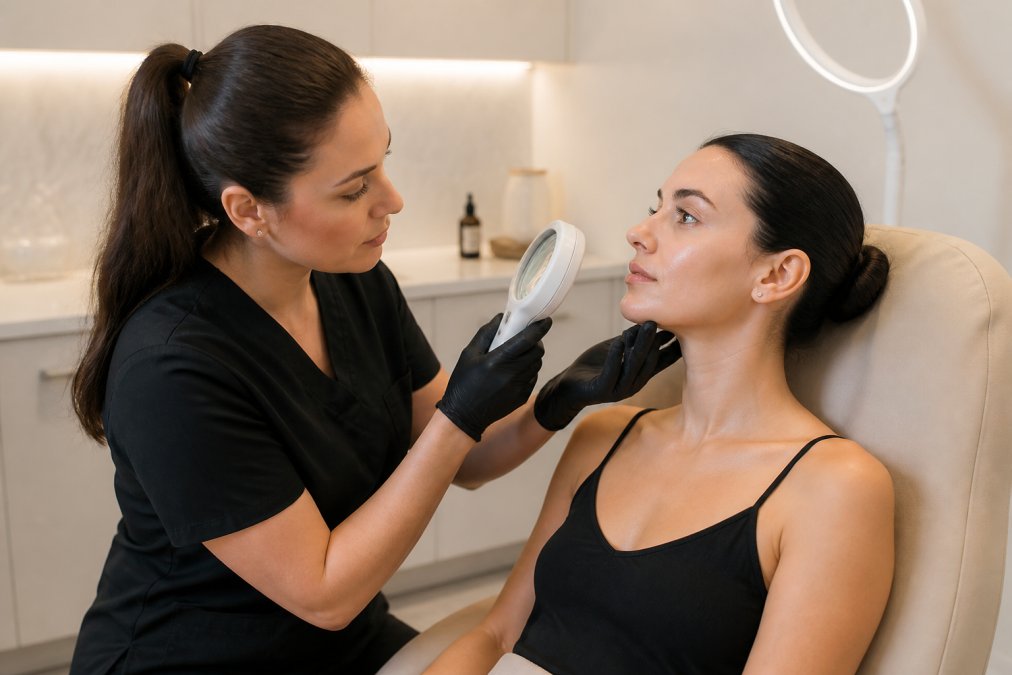
Your nurse examines your skin under professional lighting to assess texture, tone, hydration, sensitivity, and active concerns. They’ll ask about your current skincare routine, product reactions, sun exposure, stress levels, sleep patterns, and dietary habits, all factors influencing skin health. They’ll also discuss your goals, whether prevention, addressing specific concerns like pigmentation or acne, or pursuing anti-ageing treatments.
Your nurse will explain what they’ve observed, using clinical terminology but keeping it accessible. They’ll show you areas of concern and explain underlying causes. This is where personalisation begins: understanding not just what you see, but why it’s happening.
The consultation concludes with tailored recommendations: your home care routine, specific medical-grade products selected for your skin type and concerns with clear usage instructions, and any professional treatments that would benefit your goals. Your nurse will discuss timeline, frequency, and realistic expectations.
A consultation that doesn’t ask about your lifestyle, sensitivities, or past reactions is a red flag. Personalisation requires understanding your full picture, not just recommending products based on skin type alone.
Common Skin Concerns Your Plan Will Address
Acne and breakouts
Acne isn’t one-size-fits-all. Your plan distinguishes between bacterial acne, hormonal breakouts, fungal acne, and inflammatory responses triggered by barrier damage. Each requires different active ingredients and treatment approaches.
For bacterial acne, your plan might include medical-grade formulas with niacinamide, salicylic acid, or azelaic acid, ingredients clinically proven to reduce bacterial overgrowth and inflammation (peer-reviewed research). For hormonal breakouts, the focus shifts to anti-inflammatory ingredients. If acne stems from a compromised barrier, your plan prioritises barrier repair before introducing active treatments.
In-clinic treatments might include targeted laser therapy to reduce sebaceous gland activity or professional extractions paired with calming treatments, sequenced with your home care so results compound over time.
Pigmentation and melasma
Pigmentation concerns respond best to a multi-modal approach combining targeted home care with professional treatments designed to inhibit melanin production and accelerate cell turnover.
Medical-grade formulas might include vitamin C for antioxidant protection, hydroquinone or kojic acid for melanin suppression, and retinoids to increase cell turnover, prescribed at concentrations that actually work (peer-reviewed research). Professional treatments often include laser therapy or chemical peels designed to address deeper pigmentation without triggering post-inflammatory hyperpigmentation.
Melasma requires a long-term approach accounting for sun exposure, hormonal factors, and genetic predisposition, combining sun protection protocols with consistent professional treatments over months.
Fine lines and anti-ageing concerns
Anti-ageing personalisation recognises that fine lines, loss of elasticity, and volume loss each require different interventions. Your plan might combine retinoids to stimulate collagen production, peptides to support skin firmness, and targeted professional treatments like PRF to trigger natural regeneration.
For early prevention, your plan focuses on sun protection, antioxidants, and preventative treatments like gentle laser therapy to stimulate collagen before lines deepen. For established lines, your plan might layer retinoids with professional treatments designed to increase cell turnover and collagen remodelling.
Rosacea and sensitivity
Rosacea and sensitive skin require a different approach from acne or pigmentation. Your plan prioritises barrier support, anti-inflammatory ingredients, and avoidance of common triggers. Rather than aggressive actives, your routine emphasises calming formulas with niacinamide, centella asiatica, and ceramides (peer-reviewed research).
Professional treatments focus on reducing inflammation and vascular reactivity. Your personalised plan accounts for your specific rosacea triggers and builds a routine that minimises reactivity while improving skin health.
Building Your Medical-Grade Skincare Routine at Home
Your home care routine is the daily foundation of your personalised plan. Medical-grade formulas differ fundamentally from consumer skincare: they contain active ingredients at clinically effective concentrations, supported by evidence of their impact on skin health.
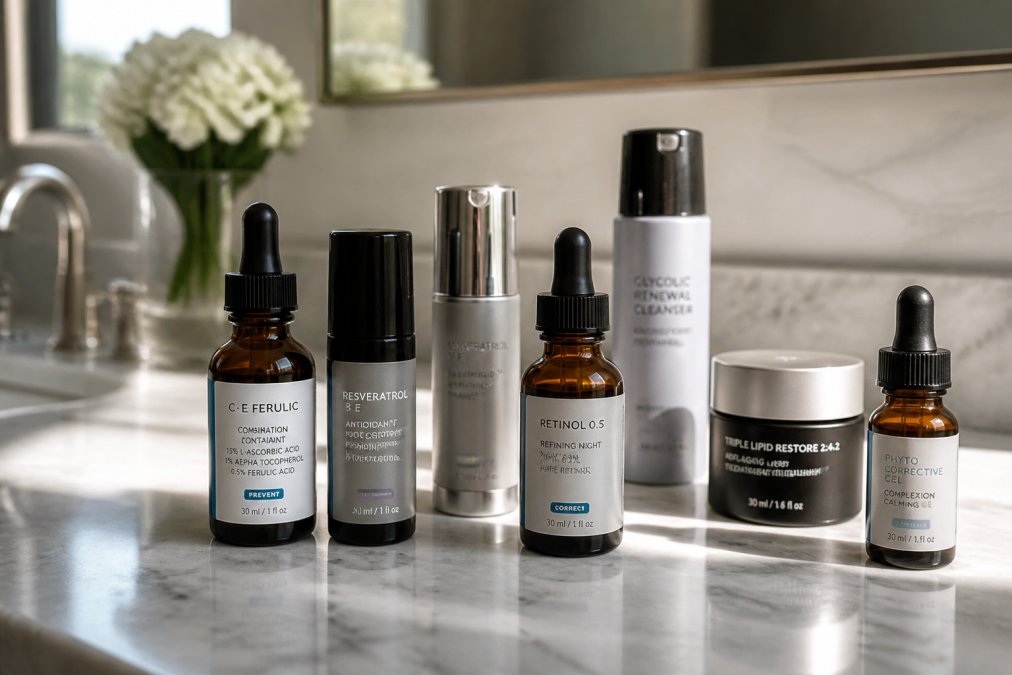
Your routine typically follows a logical sequence: cleanse, treat, hydrate, protect. The cleanser removes impurities without stripping your skin barrier. Your treatment step is where active ingredients work, this might be a vitamin C serum for antioxidant protection, a retinoid for collagen stimulation, or a targeted treatment for specific concerns. Your hydration step replenishes moisture and supports barrier function. Finally, your SPF provides essential sun protection.
The specific products depend entirely on your skin profile. If you have sensitive skin, your routine avoids harsh actives and emphasises barrier support. If you’re targeting acne, your treatment step includes proven acne-fighting ingredients at effective concentrations.
Consistency matters more than complexity. A simple routine with the right products, used correctly every day, outperforms a complicated routine with too many actives. Your nurse will provide clear instructions on how to use each product, how much to apply, and how often.
Medical-grade products work because they’re formulated for efficacy, not feel. They might not feel as luxurious as consumer skincare, but they deliver measurable results. If your routine feels uncomfortable or irritating, tell your nurse so they can adjust your plan.
Combining Home Care With In-Clinic Treatments
The real power of a personalised skin treatment plan emerges when home care and professional treatments work together strategically. Your home routine prepares your skin for clinical treatments and extends their results. Professional treatments amplify what your home care achieves alone.
For example, if targeting pigmentation, your home routine includes ingredients that suppress melanin production and increase cell turnover. Your professional treatments, laser therapy or chemical peels, accelerate that process and address deeper pigmentation your home routine can’t reach.
Timing and sequencing are critical. Your nurse will advise when to start new treatments, how often to schedule professional procedures, and how to adjust your home routine around clinical treatments. If you’ve just had a laser treatment, your routine might temporarily shift to emphasise barrier support and sun protection rather than active treatment.
The duration of your plan varies depending on your concerns. Early prevention might require professional treatments, then maintenance. More significant concerns like melasma might require consistent treatment before reaching your goals.
The Benefits of PRF Over PRP for Regenerative Skin Therapy
PRF (Platelet-Rich Fibrin) and PRP (Platelet-Rich Plasma) are both regenerative therapies using your own blood to stimulate collagen production and skin healing. PRF offers distinct advantages that make it increasingly the preferred choice.
Both therapies concentrate platelets and growth factors from your blood, then reintroduce them to trigger natural healing and collagen regeneration. The difference lies in preparation. PRP is centrifuged to separate platelets in liquid plasma. PRF uses a different centrifugation protocol that keeps platelets suspended in fibrin, a natural protein scaffold that releases growth factors more slowly and consistently over time.
This matters clinically. PRF’s fibrin matrix acts as a delivery system, gradually releasing growth factors over days and weeks rather than all at once. This sustained release triggers stronger collagen remodelling and cell turnover. PRF also contains more white blood cells, which reduce inflammation and support tissue healing. Recovery is gentler, with less redness and swelling post-treatment.
For anti-ageing concerns, PRF stimulates collagen production more effectively than PRP, leading to improved skin texture, firmness, and reduction in fine lines. Results develop gradually as collagen production increases.
PRF outperforms PRP because its fibrin matrix delivers growth factors gradually, triggering stronger and longer-lasting collagen regeneration. For regenerative skin therapy, PRF is the evidence-based choice.
How to Choose the Right Skin Program for Your Goals
Choosing the right personalised skin program requires clarity about your goals, realistic expectations, and commitment to the process. A strong program aligns with your specific concerns, includes both home care and professional treatments, and provides a clear timeline and milestones.
Start by identifying your primary concern. Are you focused on prevention, addressing a specific condition like acne or pigmentation, or pursuing anti-ageing rejuvenation? Your program should be designed around this primary goal.
Evaluate whether the program includes medical-grade home care tailored to your skin type and concerns. Generic product recommendations are a red flag; personalisation requires specific formulas selected based on your skin assessment. Your program should also include professional treatments, not just skincare products.
Look for a program that includes realistic expectations and timelines. Genuine skin change takes time, typically to see meaningful improvement, and for significant transformation. Your program should outline what progress looks like at each stage.
Finally, consider the support and flexibility of your program. Skin responds to treatments over time, and your plan may need adjustment as your skin improves. A program that includes follow-up consultations and willingness to refine your approach is more likely to deliver lasting results.
Choosing a personalised skin treatment plan is an investment in your skin health and confidence. The right program delivers measurable results because it’s designed specifically for you. At BLC Aesthetics, our Registered Nurse-led consultations create tailored plans that combine medical-grade home care with evidence-based professional treatments. Your skin is unique, your treatment should be too. Book a consultation to discuss your personalised skin treatment plan and discover how a truly custom approach transforms your skin.
Frequently Asked Questions
What is the difference between a personalised skin treatment plan and buying over-the-counter skincare products?
A personalised skin treatment plan is built on clinical assessment of your unique skin type, concerns, and goals by a qualified professional. It combines medical-grade formulas with targeted active ingredients selected for your specific needs, whether that’s addressing pigmentation, fine lines, acne, or rosacea. Over-the-counter products use one-size-fits-all formulations. A custom plan also integrates in-clinic treatments like laser therapy or non-surgical procedures with your home care routine, creating a coordinated strategy that adapts over time based on how your skin responds.
How do Registered Nurses assess skin health for custom treatment plans?
During a cosmetic nurse skin consultation, a Registered Nurse examines your skin’s texture, hydration, sensitivity, and any visible concerns under professional lighting. They ask detailed questions about your skin history, lifestyle factors, previous treatments, and aesthetic goals. This assessment identifies the root causes of your concerns, not just the symptoms. The nurse then recommends evidence-based treatments and medical-grade formulas matched to your skin’s needs, creating a tailored plan with realistic timelines and expected outcomes.
What role does medical-grade skincare play in a personalised treatment plan?
Medical-grade skincare products contain higher concentrations of active ingredients and are formulated to penetrate deeper into the skin than standard cosmetics. In a personalised plan, these products work between your in-clinic treatments to maintain results and support cell turnover. Your nurse selects specific formulas targeting your concerns, for example, products with evidence-based ingredients for collagen production if you’re addressing fine lines, or targeted solutions for pigmentation or rosacea. Consistency with the right medical-grade routine amplifies the efficacy of professional treatments.
How long do results last, and how often will I need treatments?
Results vary depending on the treatment type and your skin’s response. Some treatments show improvement within weeks; others require a series of sessions for optimal outcomes. Your personalised plan includes a maintenance schedule, some clients benefit from quarterly touch-ups, others from annual reviews. Your Registered Nurse will explain realistic timelines during your consultation and adjust the plan as your skin evolves. Consistency with your home care routine and lifestyle choices significantly influences how long results last.
Are personalised skin treatment plans suitable for sensitive skin types?
Yes. A key advantage of a personalised approach is that it’s tailored to your skin’s tolerance and sensitivities. Your Registered Nurse will assess whether your skin is sensitive to specific active ingredients, environmental factors, or procedures. The plan will use medical-grade formulas and in-clinic treatments appropriate for sensitive skin, often starting with gentler options and gradually building intensity if your skin tolerates it. This customisation reduces the risk of irritation compared to trying random products designed for ‘sensitive skin’ without professional guidance.
What is the difference between a cosmetic consultation and a standard skin check?
A standard skin check typically focuses on detecting skin conditions or health concerns. A cosmetic consultation goes deeper, your nurse assesses your skin’s aesthetic qualities, your facial balance, and how treatments can enhance your natural features while addressing specific concerns. A cosmetic nurse skin consultation includes discussion of your goals, realistic expectations, treatment options, timelines, and a detailed plan integrating home care with in-clinic therapies. It’s a comprehensive strategy session, not just a diagnostic assessment.
Will injectables or aesthetic treatments make me look frozen or overdone?
Results depend entirely on the expertise and approach of the practitioner. A Registered Nurse trained in aesthetic medicine understands facial anatomy and balance, using conservative techniques to enhance your natural features rather than dramatically alter them. During your consultation, you’ll discuss your aesthetic goals and what ‘natural’ looks like to you. Your plan will use evidence-based dosing and techniques designed for subtle, harmonious results. Your nurse will also explain recovery timelines and what to expect at each stage.