
Table of Contents
- What Actually Causes Uneven Skin Texture
- At-Home Treatments for Skin Texture Improvement
- Laser Skin Resurfacing Benefits for Rough Texture
- Chemical Peel Recovery Time: What to Expect Week by Week
- The Cosmetic Clinic Consultation Process, Step by Step
- Protecting Your Results: Sun Protection and Barrier Care
- Budget-Friendly and Advanced Treatment Paths Compared
- Frequently Asked Questions
Last Updated: September 22, 2026
What Actually Causes Uneven Skin Texture
Uneven skin texture is the result of disrupted cell turnover, where dead skin cells accumulate on the surface faster than they shed, leaving skin rough, bumpy or dull. At BLC Aesthetics, we see this constantly in clients who feel their skin looks tired despite a solid routine. The main drivers are sun exposure, dehydration, hormonal shifts and simply getting older. (Source: Statista’s 2026 report on cosmetic procedures)
- Roughness and dullness: built-up dead skin cells and slowed cell turnover
- Bumpy or congested skin: clogged pores and excess oil
- Acne scarring and pitting: collagen damage from past breakouts
- Pigmentation and uneven tone: UV exposure and post-inflammatory marks
Texture Versus a Skin Condition: When to See a Doctor
Texture changes are cosmetic. Conditions like rosacea and eczema are medical, and they need a doctor, not a beauty counter. If your skin is persistently red, itchy, flaking, burning or reacting to products, that is a signal to see a GP or dermatologist before booking any cosmetic treatment. Aggressive exfoliation on rosacea-prone skin can make inflammation worse, so getting the diagnosis right first protects your skin barrier and your results.
At-Home Treatments for Skin Texture Improvement
A consistent home routine is where skin texture improvement treatments begin, and no clinic procedure replaces it. The two workhorses are chemical exfoliants and retinoids. Both increase cell turnover, both need patience, and both can backfire if you rush them.
Chemical Exfoliants: AHAs and BHAs
AHAs (alpha-hydroxy acids) are water-soluble acids that loosen the bonds holding dead skin cells together, which smooths rough texture and brightens tone. BHAs (beta-hydroxy acids) are oil-soluble, so they travel into the pore and suit oily, congested or bumpy skin. Start with a low concentration two nights a week and build up. Overuse strips the skin barrier and triggers the exact sensitivity you were trying to avoid.
Retinoids and Vitamin A Derivatives
Retinol and prescription retinoids speed up cell turnover and support collagen production over time. They are the closest thing to a gold standard for texture, but they demand a slow introduction: pea-sized amounts, two nights a week at first, buffered with moisturiser. Expect a few weeks of flaking or purging. If your skin is sensitive, a gentler derivative or a professional-strength peel under supervision is the safer route.
Laser Skin Resurfacing Benefits for Rough Texture
Laser skin resurfacing benefits include smoother texture, more even skin tone and firmer-feeling skin by prompting collagen production in the deeper layers. It is a clinical, non-surgical option for rough texture, acne scarring and pigmentation that at-home products cannot reach. But laser is only one of several professional resurfacing paths, and the right choice depends on your concern, your skin type and how much downtime you can accept.
The main professional resurfacing options
- Fractional laser (ablative and non-ablative): treats the skin in small columns, leaving surrounding tissue intact so recovery is faster than fully ablative resurfacing. Non-ablative fractional lasers carry less downtime and suit mild-to-moderate texture; ablative fractional lasers deliver stronger collagen remodelling for scarring and deeper lines but need longer recovery. Most people need a course of sessions rather than one, and results build over months as collagen remodels.
- Microneedling (collagen induction therapy): fine needles create controlled micro-injuries that trigger collagen and elastin production. It is often chosen for acne scarring, enlarged pores and early ageing, with downtime usually limited to a day or two of redness. Radiofrequency microneedling adds heat energy for firmer skin and is typically reserved for laxity alongside texture.
- Medium-depth chemical peels: a clinician-applied acid solution (commonly TCA or a TCA-plus-agent blend) removes controlled layers of skin to smooth rough texture, soften pigmentation and refine tone. Stronger than any at-home peel, with visible peeling for around a week.
- Microdermabrasion and dermaplaning: mechanical exfoliation that lifts dead surface cells. Best for dullness and mild roughness; little to no downtime, but limited effect on scarring or deep texture.
- Energy-based and injectable adjuncts: some practitioners combine resurfacing with skin boosters or polynucleotides to support hydration and healing. These are complementary, not replacements for resurfacing.
Matching the treatment to the concern
A common pattern in clinic is that the concern dictates the modality, not the other way around:
- Dullness and mild roughness: microdermabrasion, dermaplaning or a course of superficial peels
- Bumpy, congested texture: BHA-led peels or microneedling
- Acne scarring and pitting: fractional laser or radiofrequency microneedling, usually a series
- Pigmentation with texture: medium-depth peels or laser, always paired with strict sun protection
- Fine lines with laxity: radiofrequency microneedling or ablative fractional laser
What to expect after professional resurfacing
This is where most guides stay vague, so here is a realistic week-by-week picture. Timelines vary by device and settings, but a common pattern is:
| Stage | Microneedling | Non-ablative fractional laser | Ablative fractional laser | Medium-depth peel |
|---|---|---|---|---|
| Days 1-2 | Redness, mild tightness | Redness, warmth, slight swelling | Significant redness, swelling, oozing | Noticeable redness, swelling |
| Days 3-5 | Redness fades, skin feels tighter | Redness settling, possible bronzing | Peeling begins, skin raw and tender | Visible peeling begins |
| Days 6-10 | Most redness gone | Bronzing flakes off, pink tone remains | Peeling finishes, pink tone remains | Peeling finishes, pink tone remains |
| Weeks 2-4 | Collagen building, texture softening | Tone evens, texture softening | Tone evens, collagen builds | Tone evens, collagen builds |
| Months 2-6 | Progressive improvement | Progressive improvement | Progressive improvement | Progressive improvement |
Do not pick at peeling skin, do not book resurfacing close to a big event, and do not skip sunscreen during recovery. Freshly resurfaced skin burns easily and pigmentation can rebound. Avoid active ingredients (retinoids, AHAs, BHAs) until your practitioner clears you.
Professional resurfacing is not a single treatment, it is a category. The right option is the one matched to your concern, skin type and downtime tolerance, and results build over months rather than days.
Chemical Peel Recovery Time: What to Expect Week by Week
Chemical peel recovery time depends on the depth of the peel. A superficial peel may leave mild redness for a day, while a medium-depth peel involves visible peeling for around a week. Here is a realistic timeline: (Source: Australian government’s health advice on skin conditions)
| Stage | Superficial Peel | Medium-Depth Peel |
|---|---|---|
| Days 1-2 | Mild redness, tightness | Noticeable redness, swelling |
| Days 3-5 | Light flaking | Visible peeling begins |
| Days 6-10 | Skin settles, glow appears | Peeling finishes, pink tone remains |
| Weeks 2-4 | Full result | Tone evens, collagen builds |
The Cosmetic Clinic Consultation Process, Step by Step
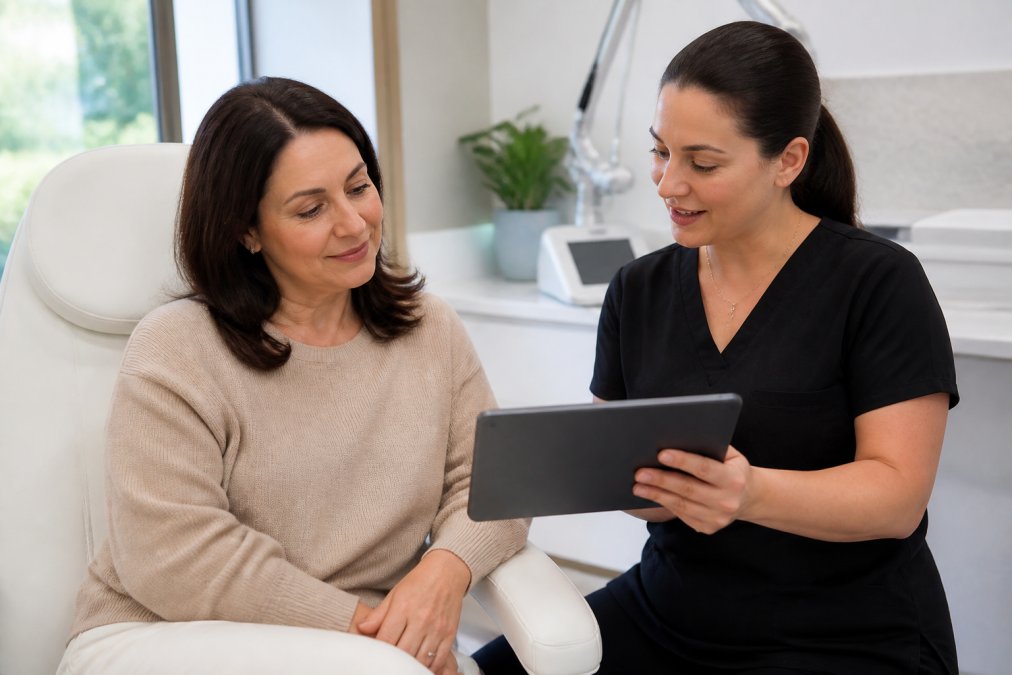
The cosmetic clinic consultation process is where a good outcome is decided, long before any treatment starts. At BLC Aesthetics, every plan begins with a Registered Nurse assessing your skin, history and goals. Here is how it runs:
- Skin assessment: your practitioner examines texture, tone, scarring and barrier health, and may take clinical photographs to track change over time
- History and goals: medications, past treatments, allergies, pregnancy or breastfeeding status, and what you actually want to change
- Honest options: what will work, what will not, and what to expect, including the option of doing nothing or starting with home care
- A tailored plan: a sequence of treatments and home care, not a one-off appointment
- Consent and aftercare: risks, downtime, a written recovery guide and clear contact details if something concerns you
Cosmetic texture versus a medical skin condition
This is the distinction most guides skip, and it matters. Texture changes, roughness, dullness, enlarged pores, mild scarring, are cosmetic concerns. Conditions such as rosacea, eczema, psoriasis, seborrhoeic dermatitis and active acne are medical, and they need a doctor, not a beauty counter.
- Persistent redness, flushing or visible blood vessels across the cheeks and nose
- Itching, flaking, cracking or burning that comes and goes
- A rash that reacts to products, heat or stress
- Painful, cystic or widespread acne
- Any mole or lesion that has changed in size, shape or colour
What to ask before you book
A good consultation is a two-way conversation. These questions separate a considered clinic from a sales-led one:
- Who will perform the treatment, and what are their qualifications and registration?
- What device or product will be used, and why is it right for my skin type?
- How many sessions will I likely need, and how far apart?
- What is the realistic downtime, and what aftercare will I need to follow?
- What are the risks for my skin tone, including pigmentation changes?
- What happens if I have a complication, who do I contact and when?
- What is the total cost of the plan, not just the first session?
Bring a list of every product you currently use, including prescription creams. Some active ingredients need to be paused before certain treatments, and your practitioner can only plan around what they know.
Be cautious of any clinic that promises a specific result, pressures you to decide on the day, or dismisses your questions about risks and downtime. Informed consent is a process, not a signature.
The consultation is not a formality, it is the step that determines whether a treatment is safe, suitable and worth your money. If a clinic cannot explain the trade-offs clearly, that is your answer.
Protecting Your Results: Sun Protection and Barrier Care
Everything you do to improve skin texture can be undone by UV exposure. Daily sunscreen, reapplied through the day, is the single most important habit for holding onto your results. Alongside it, support the skin barrier with ceramides, hyaluronic acid and vitamin C, and keep moisturising consistent. A healthy barrier means less sensitivity, better tolerance of retinoids and peels, and skin that looks calmer and more even.
Budget-Friendly and Advanced Treatment Paths Compared
Not everyone needs the most intensive option, and the right path depends on your concern and your budget. A budget-friendly route leans on a consistent home routine with retinoids, exfoliants and sunscreen, plus occasional superficial peels. An advanced path adds clinical treatments like laser resurfacing, microneedling or medium-depth peels for scarring and deeper texture concerns. Neither is “better”; they solve different problems.
Frequently Asked Questions
What are the most effective professional treatments for uneven skin texture?
Professional options include laser skin resurfacing, chemical peels, microneedling and skin needling, and some energy-based devices. The best choice depends on your skin type, concern and how much downtime you can accept. A consultation with a qualified clinician is the safest way to match a treatment to your skin. Results build over weeks to months as collagen production and cell turnover improve.
How long does it take to see results from skin texture improvement treatments?
Timelines vary by treatment. Superficial chemical peels may show smoother texture within a week, while laser resurfacing and microneedling typically need several weeks for collagen remodelling and visible change. Most plans involve a series of sessions spaced weeks apart. Your clinician can give a realistic timeline for your specific skin and treatment combination.
What should I expect during a professional skin texture consultation?
A cosmetic clinic consultation process usually starts with a skin assessment and medical history, including any medications or past treatments. The clinician discusses your concerns, explains suitable options and their risks, and outlines a plan with expected downtime and costs. You should leave with a clear understanding of what is involved and time to ask questions before deciding.
Are there specific safety standards for cosmetic skin treatments?
In Australia, cosmetic procedures are regulated, and clinics must meet infection control and equipment safety requirements. Clinicians should hold appropriate registration and training for the treatments they provide. Ask about the practitioner’s qualifications and the clinic’s protocols. A reputable clinic will welcome these questions and explain the risks and aftercare clearly before you proceed.