
Table of Contents
- What Is PRP and How Is It Prepared
- What Is PRF and How Is It Prepared
- PRP vs PRF for Face: Key Differences Explained
- How Long Do PRF Results Last
- PRF Treatment Risks and Contraindications
- Skin Rejuvenation Benefits: Fine Lines, Wrinkles, and Acne Scars
- Who Is a Suitable Candidate and Treatment Considerations
- Frequently Asked Questions
Last Updated: October 7, 2026
What Is PRP and How Is It Prepared
Platelet-rich plasma (PRP) is a concentration of platelets derived from your own blood. It contains growth factors and proteins that stimulate cellular activity and tissue repair. The preparation process begins with a simple blood draw, typically 10-15 millilitres from your arm.
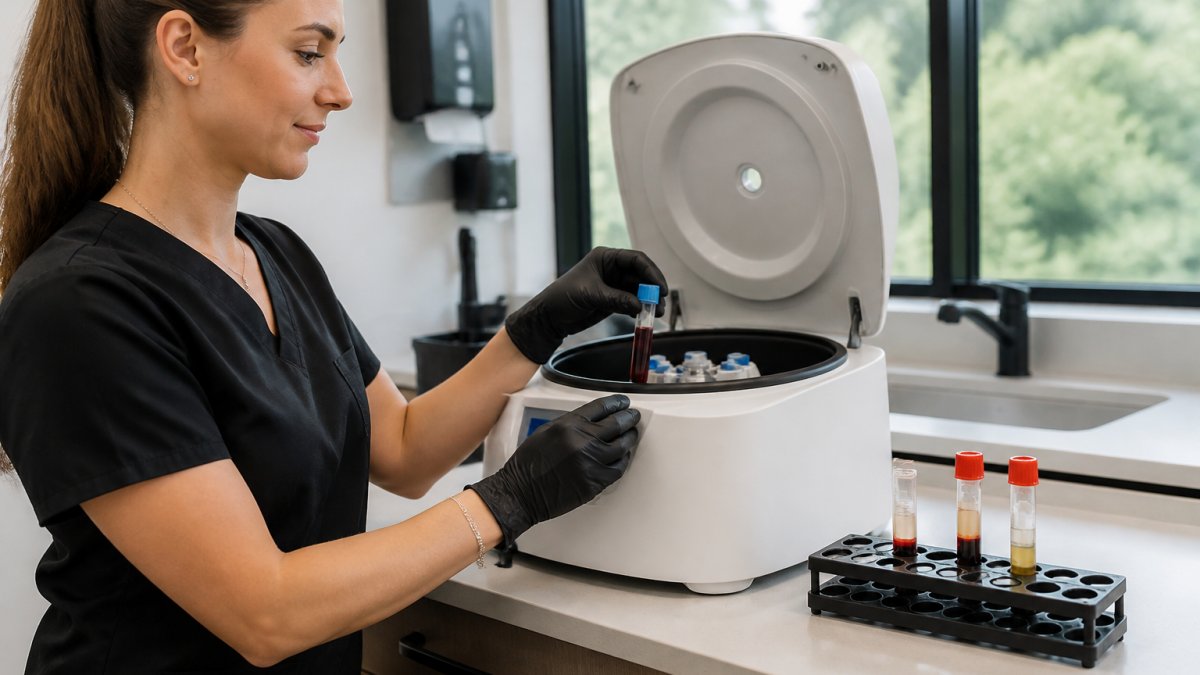
Once collected, the blood is placed into a centrifuge, a machine that spins at high speed to separate blood components by density. Standard PRP centrifugation typically runs at 1200-1500 RPM for 5-10 minutes. This separates red blood cells from the plasma layer above them. The practitioner then carefully extracts the platelet-rich layer and may add an anticoagulant to prevent clotting before injection.
The result is a concentrate with roughly 3-5 times more platelets than whole blood. These platelets release growth factors including platelet-derived growth factor (PDGF), transforming growth factor-beta (TGF-β), and vascular endothelial growth factor (VEGF). When injected into the skin, these factors trigger collagen production and cellular renewal.
The entire PRP preparation typically takes 15-20 minutes from blood draw to injection-ready product. Because PRP uses your own blood, there’s minimal risk of allergic reaction or immune response. At BLC Aesthetics, our Registered Nurse-led team provides personalised aesthetic consultations.
What Is PRF and How Is It Prepared
Platelet-rich fibrin (PRF) is a newer regenerative technology that produces a different end product from PRP. Like PRP, it begins with a blood draw, but the centrifugation process differs significantly.
PRF uses a slower centrifugation speed, typically 700-800 RPM for 12-14 minutes, compared to PRP’s faster spin. This gentler, longer process preserves more white blood cells and fibrinogen (a clotting protein) within the concentrate.
The fibrin matrix is the key difference. Unlike PRP, which is often injected as a liquid, PRF forms a semi-solid plug that remains at the injection site longer. This extended presence means slower, more sustained release of growth factors over several weeks rather than days.
PRF preparation takes slightly longer than PRP, roughly 20-25 minutes total, because of the extended centrifugation time. However, no anticoagulant is added, which means the blood clots naturally within the centrifuge tube. This natural clotting process concentrates fibrinogen and creates the fibrin matrix structure.
The resulting PRF concentrate contains not just platelets but also white blood cells (leucocytes) and fibrinogen. These additional components may enhance the immune response and tissue-remodelling process compared to PRP alone.
PRP vs PRF for Face: Key Differences Explained
Preparation and centrifugation speed
The most fundamental difference between PRP and PRF for skin rejuvenation lies in how each is processed. PRP uses faster centrifugation (1200-1500 RPM) for a shorter duration, which efficiently separates platelets but may damage some white blood cells in the process. PRF uses slower centrifugation (700-800 RPM) for longer, preserving white blood cells and allowing fibrinogen to concentrate naturally.
This processing difference creates distinct products. PRP is typically a liquid concentrate injected directly into treatment areas. PRF forms a semi-solid fibrin matrix that acts as a scaffold, holding growth factors and cells in place at the injection site.
The speed difference also affects preparation time. PRP is faster, ready in 15-20 minutes, while PRF requires 20-25 minutes. For practitioners, this means slightly longer chair time for PRF procedures, though patients experience minimal difference in the actual injection process.
Platelet concentration and fibrin matrix
PRP delivers high platelet concentration in a liquid form, which means rapid release of growth factors immediately upon injection. The platelets distribute into surrounding tissue quickly, stimulating an acute inflammatory response that triggers collagen production and cellular turnover.
PRF’s fibrin matrix works differently. The gel-like structure acts as a biological scaffold that holds platelets and white blood cells in proximity to damaged tissue. Rather than rapid dispersal, growth factors release gradually over 2-4 weeks as the fibrin matrix slowly degrades. This sustained-release mechanism may provide more consistent, prolonged tissue stimulation.
White blood cells present a secondary distinction. PRP centrifugation at high speed may reduce white blood cell concentration, whereas PRF’s gentler process preserves these cells. White blood cells contribute to immune response and tissue remodelling, potentially enhancing healing. However, the clinical significance of this difference remains an area of ongoing research.
Growth factors and collagen production
Both PRP and PRF for skin rejuvenation trigger collagen production, but through slightly different mechanisms. PRP’s rapid growth factor release creates an intense but brief stimulus. This acute phase activates fibroblasts, the cells responsible for collagen synthesis, quickly but for a shorter window.
PRF’s slower release provides a more sustained fibroblast activation over weeks. Some practitioners report that this extended stimulation produces more gradual, consistent collagen remodelling. However, both approaches ultimately aim to increase type I and type III collagen in the dermis, improving skin elasticity and texture.
The growth factors present in both concentrates are similar: PDGF, TGF-β, VEGF, and others. The difference is delivery kinetics, how fast and how long these factors remain active in the tissue. Neither approach is universally superior; the choice depends on individual skin condition and treatment goals.
The core distinction: PRP delivers rapid growth factor release from a liquid concentrate, while PRF for skin provides sustained release through a fibrin matrix. Both stimulate collagen production, but on different timelines.
How Long Do PRF Results Last
Results from PRF treatment typically emerge gradually over 4-8 weeks as collagen remodelling progresses. Initial improvements in skin texture and tone may appear within 2-3 weeks, but the most significant changes occur around the 8-12 week mark as new collagen fully integrates into the dermis.
The longevity of PRF results varies by individual. Many patients report visible improvement lasting 12-18 months, though some see benefits extend to 2 years. Factors influencing duration include skin thickness, age, sun exposure, and overall skin health. Younger skin with good collagen reserves may maintain results longer than aged or sun-damaged skin.
Maintenance treatments are common. Many practitioners recommend a second PRF session 6-12 months after the initial treatment to sustain results. Some patients opt for annual maintenance, while others space treatments further apart based on how quickly they notice fading.
PRP results typically last 6-12 months, shorter than PRF because the rapid growth factor release produces a more acute response. The difference in longevity partly explains why some practitioners prefer PRF for facial rejuvenation, the extended collagen-building window may produce more durable outcomes.
PRF Treatment Risks and Contraindications
Like any injection procedure, PRF carries minimal but real risks. Bruising, swelling, and temporary redness at injection sites are common and typically resolve within 3-7 days. Some patients experience mild discomfort during injection, though topical anaesthetic reduces this.
Infection risk is low because PRF uses autologous material (your own blood), eliminating foreign-body rejection. However, sterile technique during collection and injection remains essential. Reputable clinics follow strict protocols to prevent contamination.
Certain conditions contraindicate PRF treatment. Active skin infections, severe acne, or open wounds should heal completely before treatment. Patients on blood thinners (anticoagulants) may experience excessive bruising and should consult their doctor before proceeding. Platelet disorders or haematologic conditions may affect PRF efficacy and require medical clearance.
Pregnancy and breastfeeding are generally considered reasons to defer treatment, though evidence-based contraindications remain limited. Patients with active cancer or immunosuppression should avoid PRF until cleared by their oncologist or immunologist.
Allergic reaction to PRF is extremely rare since it’s autologous, but reaction to topical anaesthetic or other injection additives is possible. Always inform your practitioner of known allergies before treatment.
Skin Rejuvenation Benefits: Fine Lines, Wrinkles, and Acne Scars
PRF and PRP both address multiple skin concerns through collagen stimulation and cellular renewal. For fine lines and wrinkles, the increased collagen production plumps the dermis, reducing surface creases. Results are gradual and natural-looking, not the immediate tightening of neurotoxins, but genuine tissue improvement over weeks.
Under-eye area treatment with PRF shows particular promise. The delicate skin responds well to growth factor stimulation, and the fibrin matrix’s prolonged presence may enhance results in this sensitive zone. Many patients report improved skin texture, reduced fine lines, and brighter appearance in the orbital area.
Acne scars respond differently depending on scar type. Atrophic scars (depressed scars) improve as collagen fills the depression from within. Rolling scars and boxcar scars show moderate improvement. Ice-pick scars, being extremely deep and narrow, respond less predictably. A consultation with a qualified practitioner helps determine realistic outcomes for your specific scar pattern.
Skin texture and tone improve as collagen remodels and cellular turnover accelerates. Patients often report smoother skin surface, refined pore appearance, and more even pigmentation after 8-12 weeks.
Combine PRF with other treatments for enhanced results. Many practitioners layer PRF with microneedling or other collagen-induction therapies to amplify tissue remodelling. At BLC Aesthetics, we customise treatment protocols based on individual aesthetic goals.
Who Is a Suitable Candidate and Treatment Considerations
Ideal candidates for PRP vs PRF skin rejuvenation are adults seeking natural collagen stimulation without surgical intervention.
Age is not a barrier. Younger patients (25-35) often pursue these treatments for prevention and early skin maintenance, while older patients seek wrinkle correction and texture improvement.
However, certain groups may not be suitable candidates. Patients with active skin infections, severe acne, or open wounds should wait until skin heals.
Patients with unrealistic expectations, expecting results equivalent to surgery or wanting immediate transformation, may be disappointed. PRF and PRP for skin rejuvenation deliver gradual, natural improvement, not dramatic change.
Prior treatments matter too. If you’ve had recent filler injections, wait 2 weeks before PRF to allow filler to settle.
Sun damage severity influences candidacy. Heavily sun-damaged skin may benefit from PRF but may also need complementary treatments (laser therapy, chemical peels) for optimal results.
Do not pursue PRF immediately after aggressive skin treatments. Your skin needs time to recover. Injecting growth factors into freshly treated skin can trigger excessive inflammation and unpredictable outcomes. Always follow your practitioner’s post-treatment timeline before adding new procedures.
Understanding the difference between PRP vs PRF skin rejuvenation helps you to make informed treatment decisions.
At BLC Aesthetics, our Registered Nurse-led team assesses your individual skin condition and aesthetic goals to recommend the most suitable regenerative treatment. Whether PRP or PRF aligns better with your needs depends on factors only a thorough consultation can clarify. Book a personalised consultation with BLC Aesthetics to explore how autologous regenerative therapy can enhance your skin health and confidence.
| Aspect | PRP | PRF |
|---|---|---|
| Centrifugation speed | 1200-1500 RPM | 700-800 RPM |
| Duration | 5-10 minutes | 12-14 minutes |
| Product form | Liquid concentrate | Semi-solid gel |
| Growth factor release | Rapid (days) | Sustained (weeks) |
| White blood cells | Reduced | Preserved |
| Results timeline | 6-12 weeks | 8-12 weeks |
| Result longevity | 6-12 months | 12-18 months |
| Ideal for | Quick response | Sustained remodelling |
Australian Society of Plastic Surgeons guidance on regenerative therapies provides professional standards for autologous blood concentrate procedures. Research from peer-reviewed aesthetic medicine journals on PRF efficacy demonstrates measurable improvements in collagen density and skin elasticity following sustained-release growth factor therapy.
Frequently Asked Questions
Which is better for my face, PRP or PRF?
Both PRP and PRF stimulate collagen production and tissue repair, but they work differently. PRF contains a fibrin matrix that releases growth factors more slowly, potentially offering longer-lasting results. PRP acts faster but may require more frequent sessions. The choice depends on your skin concerns, recovery timeline, and aesthetic goals. A consultation with a qualified professional can determine which suits your specific needs.
How long do PRF results last for skin rejuvenation?
PRF results typically develop gradually over 4-12 weeks as collagen production increases. Most patients experience visible improvements in skin texture, fine lines, and skin tone within this period. Results can last 12-18 months or longer, though this varies based on age, skin condition, and lifestyle. Maintenance treatments are often recommended annually to sustain the benefits of skin rejuvenation.
What are the main risks of PRF treatment?
PRF treatment risks are generally mild and include temporary redness, swelling, bruising, and sensitivity at injection sites. Rare complications may include infection or allergic reaction to additives. Individuals with active infections, certain blood disorders, or those on specific medications may not be suitable candidates. Proper aftercare and choosing a qualified practitioner significantly reduces risks. Discuss your medical history during consultation to identify any contraindications.
Can PRP work effectively on skin in people aged 50 and over?
Yes, PRP can benefit skin rejuvenation in people aged 50 and over by stimulating collagen production and improving skin texture, fine lines, and wrinkles. However, results may take longer to appear and may be more subtle than in younger skin due to slower cellular activity. Combining PRP with other treatments or using PRF for sustained growth factor release may enhance outcomes. A personalised treatment plan tailored to your skin condition and goals is essential.